Latest Posts

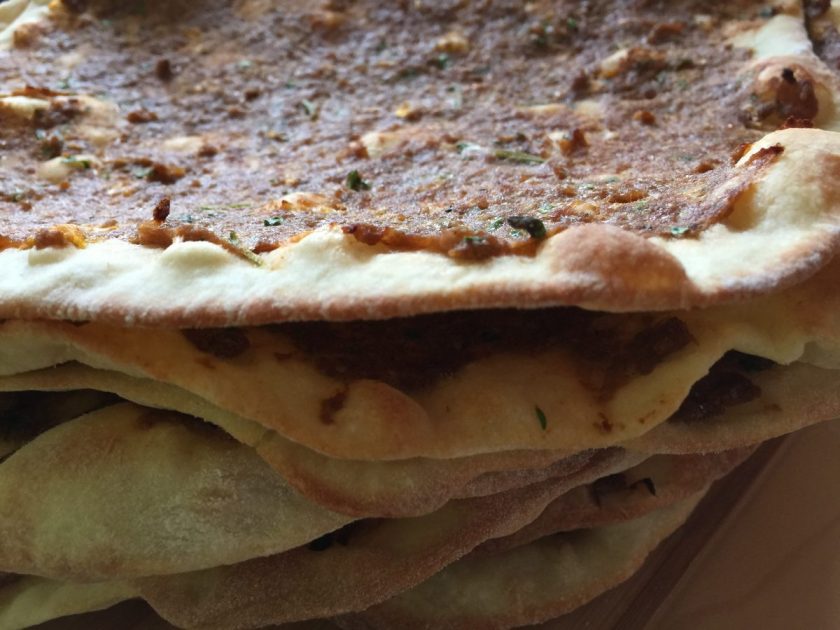
lahmajoun

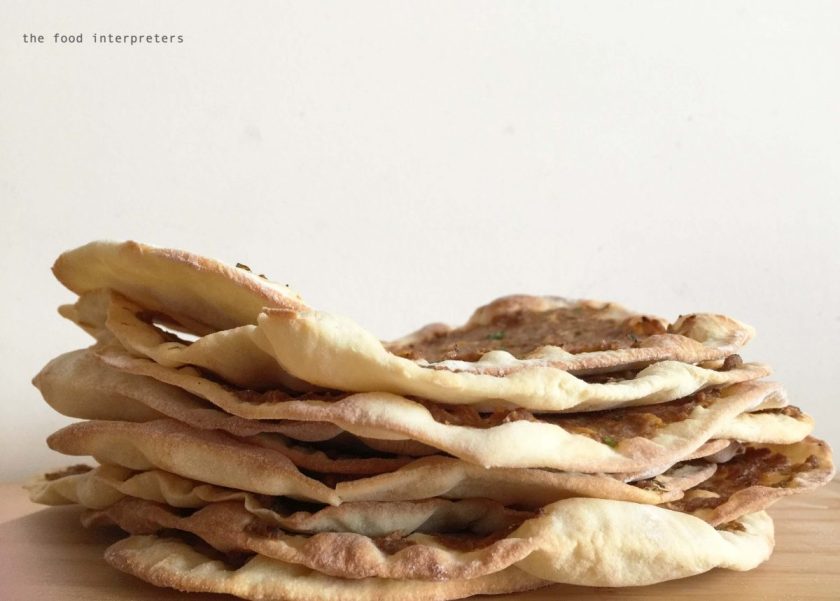
Lahmajoun

Before food globalisation lahmajoun existed on the fringes of food choices in Greece. You could find it mostly in Armenian restaurants and did not even feature in culinary choices of the part of my family that arrived from Asia Minor. Nowadays it is very much in vogue, and some of the best street food in Athens.

This healthy pizza alternative (without the chilli flakes) is a great dinner idea for kids.

lahmajoun dough

lahmajoun dough

For the dough

  • 620g all purpose flour
  • 2 tsp sea salt
  • 300g milk
  • 45g olive oil
  • 9g dried yeast dissolved in 3 Tbsp lukewarm water
  • 1 tsp caster sugar

For the topping

  • 580g minced beef (or lamb or a mixture of both)
  • 140g onion
  • 80g red bell pepper
  • 2 plum tomatoes, deseeded (you can use canned tomatoes)
  • 1 clove of garlic (optional)
  • 20g parsley leaves
  • 40g olive oil
  • 2 Tbsp tomato paste
  • 2tsp sweet paprika
  • 2tsp ground cumin
  • 1 tsp freshly ground black pepper
  • 1 tsp dried chilli flakes (optional)
  • 1 tsp sea salt
lahmajoun

lahmajoun

Start with the dough. Add the sugar to the dissolved yeast and stir. Set aside for about 10 minutes until frothy.

In the bowl of an electric mixer, combine the flour with the salt. Make a well in the middle and add the milk, olive oil and the yeast mixture. Using the hook attachment mix on low speed for about 3 -4minutes until a dough forms. Add some more lukewarm water or flour  if necessary. Cover with a tea towel and let it rise in a warm place for about 1 hour until it doubles in size.

To make the topping process the onion, pepper, deseeded plum tomatoes, garlic (if using) and parsley leaves in a food processor until everything is well ground but not pureed. Strain through a sieve and discard any excess liquid. Add the ground vegetables, the olive oil, tomato paste and the spices to the minced beef and  mix with your hands until everything is mixed thoroughly.

Place the pizza stone on the bottom rack of a cold oven and turn the oven to 200°C .

Divide the risen dough into 16 balls. Lightly flour your work surface and roll each ball into a thin disc, about 2mm thick and 18-20cm in diameter.

Place the discs, one at a time, on a very well floured moveable, slick cutting board to help you transfer the lahmajoun to the hot pizza stone once it is topped.  Divide the topping into 16 portions and spread the topping evenly with your fingers to the edge of the discs.

spread the topping evenly with your fingers to the edge of the discs

spread the topping evenly with your fingers to the edge of the discs

Transfer one lahmajoun at a time to the pizza stone (this can be tricky, you may need the help of a spatula to guide the crust onto the heated stone) and bake for about 4- 5 minutes, or until meat is cooked and dough is golden around the edges.Since oven temperatures vary, watch closely.

If you do not use a pizza stone, preheat the oven to 200ºC, place the lahmajouns on a baking tray lined with baking parchment and bake for about 10-15 minutes.

Repeat with remaining dough and topping.

Serve warm.You can roll them and eat them plain, or topped with  chopped parsley and a drizzle of lemon juice.

Once cool, lahmajouns freeze very well with clingfilm between each one, sealed in plastic freezer bags for several weeks.

lahmajoun


lahmajoun
Waiting for Santa

The Greek Santa visits on new years’ eve. He is Saint Basil, and comes from Anatolia. He was a major theologian of the eastern church, who excelled in the ‘nature of beings’, still ‘living among us, as he talks through the books’.

He is very byzantine, and we have a description of his looks: “As of the character of his body he was long. Dry and lean, dark and yellow in colour of the face, long nose, cheeks and beard. His face was wrinkled and with some scars. He looked like someone who thinks”.

He had an elder sister (one of the few early Christian women theologians – Basil recorded a discussion with her ‘on the nature of the soul’) and a theologian-philosopher younger brother. One of his fellow students during his years in Athens was Julian the Apostate, the last pagan roman emperor.

I prefer this austere Santa to the chubby guy on the slate (Tim’s Burton version excluded). He doesn’t smile and was probably not very agreeable, but he is closer to our hearts and minds, and he features in the non-comprehensible Christmas carols we sang as children.  His only concession to the good life is the glass of milk he drinks and the kourabies he eats when visiting during the night to bring the presents.

xmas16-2

xmas16-3

xmas10.1 fi

xmas6.1 fi

xmas5-1fixmas11-fi

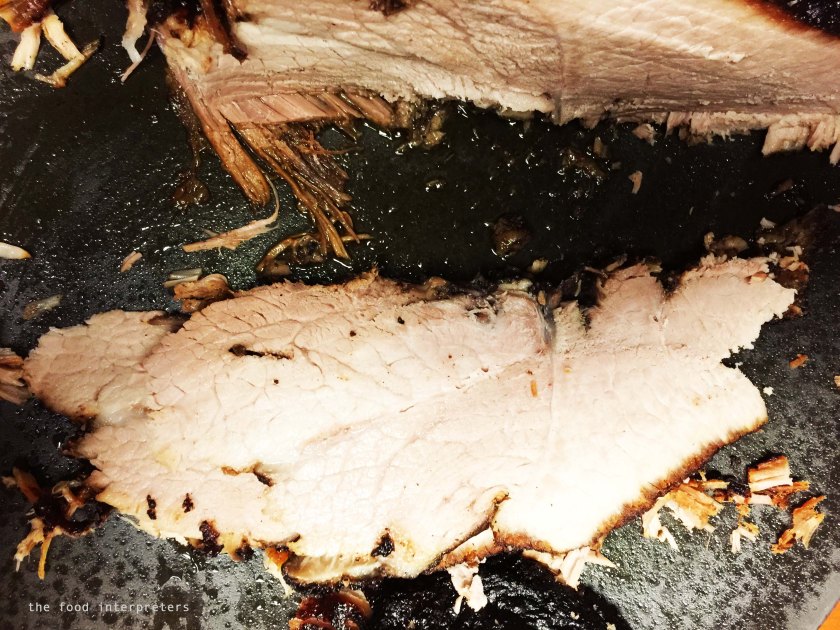
Roasted Leg of Wild Boar

This wild boar is irresistible, and always a success at dinner parties, not to mention the fact that you can have any leftovers cold in sandwiches. There are a couple of instructions you must follow: marinate for 3 days,  stick to the high temperature cooking instructions and use a not-too-big tray so that the marinate does not evaporate completely.

Adapted from an epicurious recipe.

Serves 8-10

  • 2,5-3kg boneless leg of wild boar
  • 1/4 cup coarse sea salt
  • 1/4 cup coarsely ground black pepper

For the marinade

  • 4 cups red wine
  • 2 dried bay leaves
  • 50g fresh sprigs of thyme
  • 2 Tbsp black peppercorns
  • 6 cloves
  • 1 carrot (about 60g), cut in 1cm chunks
  • 1 onion (about 120g), cut in eighths
  • 1/4 cup red wine vinegar

To roast the wild boar

  • 20 cloves

For the sauce

  • 2 cups chicken stock
  • 2 Tbsp thyme honey

boar2

Rub the wild boar with the salt and pepper, place it in a shallow dish, and refrigerate for 36 hours loosely covered.

To prepare the marinade add the wine , bay leaves, thyme, peppercorns, cloves, carrot and onion in a saucepan and bring to a boil over medium heat. Cook for about 3-4 minutes. Remove from the heat, strain reserving the herbs and spices and discarding the carrots and onions. Add the red wine vinegar and let cool to room temperature.

Rinse most of the salt and pepper from the wild boar and pat dry with paper towels. Place the meat in a deep dish, pour the cooled marinade over it, refrigerate loosely covered and let marinate for 36 hours, turning it 4-5 times during that time.

Preheat the oven to 230ºC (fan)

Remove the wild boar from the marinade and pat dry it with paper towels. Strain the marinade discarding all the herbs and spices.

With a sharp thin knife , make about 20 small incisions into the flesh of the boar and insert a clove to each incision. Transfer the boar to a  baking dish, pour 1 cup of the marinade over it and roast in the middle shelf of the oven for about 2 hours. Check it every 20-25 minutes to be sure the marinade hasn’t completely evaporated, adding 1 cup at a time until all the marinade is used.

When cooked, remove the boar  from the baking dish and allow to rest in a warm place covered in foil for about 30 mins.

To prepare the sauce, transfer any juice and brown bits from the bottom of the baking dish to a saucepan. Add the chicken stock and bring to a boil over medium-high heat. Reduce by about 1/4, then stir in the honey.Continue cooking and whisking for about 10 minutes, until you have a smooth sauce.

Serve the wild boar thinly sliced  with roast potatoes, a green salad and the sauce on the side.

roast potatoes

roast potatoes


chickpeas with leeks

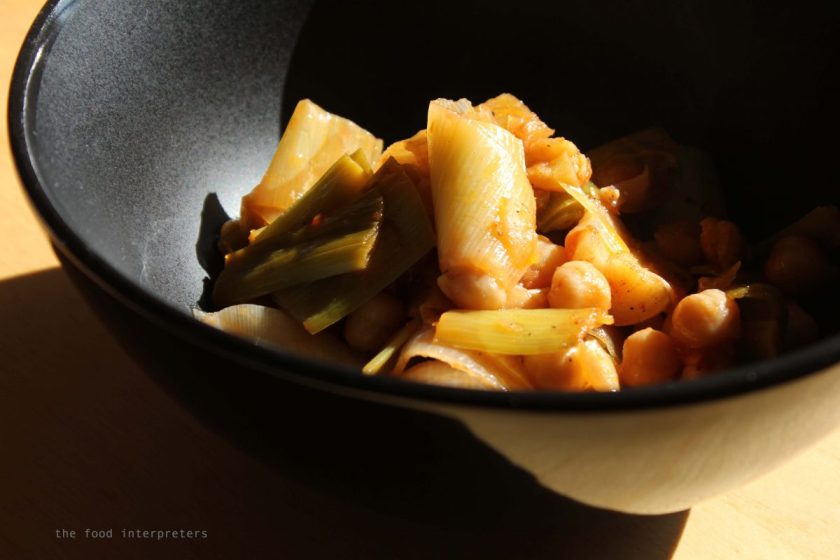
Chickpeas and leeks, a vegan feast

Chickpeas have existed forever in the Mediterranean. They have been found in Jericho, and they were probably consumed under the walls of Troy by the Myrmidons. They are cheap, nutritious and connected to historical memory (ground chickpeas were used as a cheap alternative to coffee during the big wars of the 20th century).

Most bizarrely, roasted chickpeas are eaten as a snack, similar to nuts; I had not had them for a number of years, and thinking about them reminds me of ‘simpler times’. They go exceptionally well with whiskey.

soaked chickpeas

soaked chickpeas

To prepare the chickpeas

  • 200g  dry chickpeas, soaked overnight in plenty of cold water
  • 150g onions, finely chopped
  • 800ml water
  • 4 Tbsp olive oil
  • 1 pinch sea salt
leeks

leeks

For the leeks

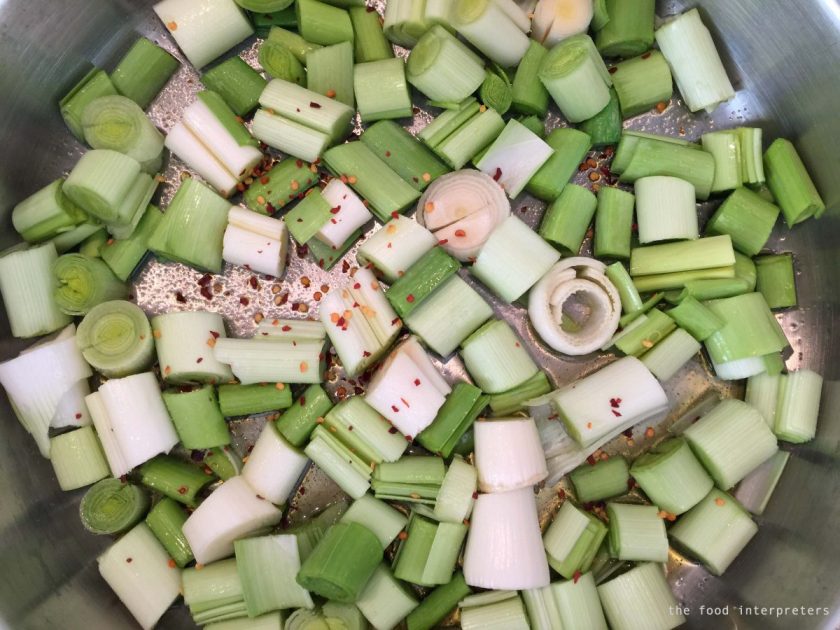
  • 6 medium leeks, white and pale-green parts only, cut into 2cm pieces (about 700g)
  • 3/4 olive oil
  • 1/2 tsp dried chilli flakes (optional)
  • 1/2 cup white dry wine
  • 1 cup grated or puréed tomatoes (fresh or canned)
  • 1 tsp sugar (optional, depending on the acidity of the tomatoes)
  • 3 cups very well drained boiled chickpeas
  • sea salt and freshly ground black pepper
dry chickpeas

dry chickpeas

To prepare the chickpeas

Soak the chickpeas overnight (8-12 hours) in a large  bowl  with plenty of cold water to allow them to double in size and still remain completely covered. Next day, strain the chickpeas and rinse clean under cold water.

Place the chickpeas in the pressure cooker and add enough fresh water to cover them (about 800ml). Add the onions and the olive oil. Bring the chickpea mixture to a boil, close the pressure cooker tightly, and once it begins releasing steam, reduce the heat to medium low and cook for about 40 minutes (or according to directions for your own pressure cooker). Once you remove the cooker from the heat and release the pressure as directed for your cooker, check to see if the chickpeas are as soft as you like them. If not, cook them for some more minutes.

When fully cooked, remove from the heat and season with a pinch of salt.*

Drain the chickpeas from their liquid** and set aside.

leeks

leeks

To prepare the leeks.

Heat the olive oil and the dried chilli flakes (if using) in a large, wide saucepan over medium heat. Add the leeks, season with a pinch of salt and cook for about 10 minutes stirring gently from time to time.

Pour in the wine. As soon as it steams up, add the tomatoes and the sugar. Cover, reduce the heat to low and let simmer for about 30 minutes.

Add the cooked and drained chickpeas, season with salt and freshly ground black pepper and cook for 10 more minutes.

Serve warm or in room temperature with feta cheese or tyrokafteri (spicy feta cheese spread) or taramosalata  on the side and lots of fresh crusty bread.

*At this point if you add some lemon juice you can have them as a chickpea soup.

**Sometimes I keep the liquid (and a few chickpeas) and cook rice in it.

chickpeas with leeks

chickpeas with leeks

bruschettas

Bruschetta Improvisation

It is Saturday, you are running around like crazy, you had no time to prepare a decent lunch, you want to stay at home and you are not in the mood to make compromises. What can you do? Open the fridge and reach out for some basic ingredients. Make something simple, festive and delicious. Spread it over some toasted bread and voila! Bruschettas extraordinaires!

Serves 4 as a starter or 2 as a quick main dish

For the avocado spread

  • 1 ripe avocado
  • 1/2 tsp dijon mustard
  • juice of 1 lemon (or less)
  • 3-4 cherry tomatoes, finely chopped
  • salt to taste (optional)
  • freshly ground black pepper

For the bruschettas

  • 8 toasted slices of sourdough bread
  • avocado spread
  • 1/2 quantity of spicy feta cheese spread (tyrokafteri)
  • sliced cherry tomatoes
  • very thinly sliced parmesan
  • very thinly sliced ham
  • extra virgin olive oil
  • red bell pepper, cut into thin strips
  • pickled  gherkins, sliced
  • parsley leaves for garnishing

Combine the avocado, dijon mustard and lemon juice in a mini food processor until smooth. Transfer to a bowl, add the chopped tomatoes, salt (if using) and freshly ground black pepper to taste. Cover and keep refrigerated until needed.

bruschettas

bruschettas

Place 4 of the toasted bread slices on a wooden board. Spread an equal amount of avocado spread on each slice. Top each with sliced cherry tomatoes, thin parmesan and ham slices. Sprinkle with freshly ground black pepper. Drizzle with extra virgin olive oil.

bruschettas

bruschettas

Place the remaining toasted bread slices on the wooden board and spread an equal amount of spicy feta spread on each slice. Top each with the red bell peppers strips, the sliced pickled gherkins and some parsley leaves.


Old fashioned Vanilla Cake

It does not get more homey than this cake. Enjoy with a cup of hot chocolate or with a cup of coffee!

Serves 8-10

  • 250g butter (plus 1 Tbsp butter for greasing the tin)
  • 160g sugar
  • 4 eggs
  • 1 cup full fat milk *
  • seeds from 1/2 vanilla pod (or 1 Tbsp vanilla extract)
  • 280g self-raising flour, sifted (plus 1 handful for dusting the tin)
  • 1tsp baking powder
  • 50g raw unsalted almonds, ground
  • icing sugar for dusting

Preheat the oven to 180ºC.

Use a pastry brush and 1 Tbsp melted butter to grease the bundt cake tin really well. Take a small handful of flour and dust lightly around the inside of the greased tin. Turn upside down over your kitchen sink and knock gently to remove any excess flour.

Combine the butter and caster sugar in a mixer fitted with the whisk attachment until light and creamy.

Add the eggs, one at a time, beating well after each addition.

Add the vanilla seeds and the milk and combine. At this point the mixture will probably look a little bit curdled. Don’t worry, it will improve when you fold in the dry ingredients.

Mix together the sifted flour, baking powder and ground almonds and carefully fold into the egg mixture.

To prevent the formation of air bubbles, spoon the batter into the tin somewhat slowly. To release any bubbles that may have developed, tap the tin gently on a work surface.

Bake for about 45-50 minutes or until a knife inserted in the thickest part of the cake comes out clean.

Transfer the pan to a wire rack and let the cake cool in the tin for 15 minutes. Then tap the tin firmly a few times and shake it gently to help loosen the cake. Invert the tin onto the rack, lift it off and let the cake continue to cool on the rack.

Use a fine-mesh sieve or flour sifter to dust the cake with icing sugar just before serving, as the sugar tends to melt into the cake as it sits.

*You could also use 200g of greek yogurt or 1 cup of orange juice instead of milk. You could also add some orange zest.

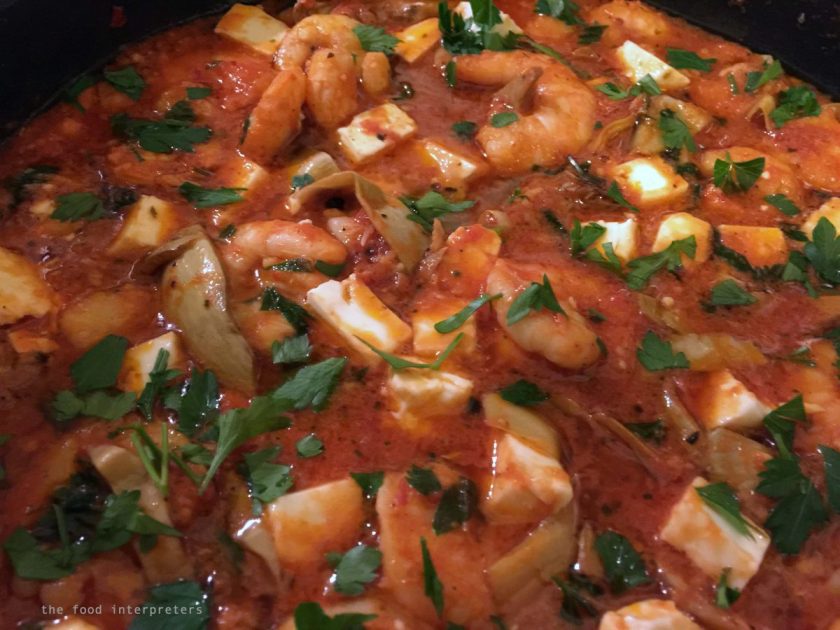
shrimp, artichoke and feta pasta sauce

Shrimp, Artichoke and Feta Pasta Sauce

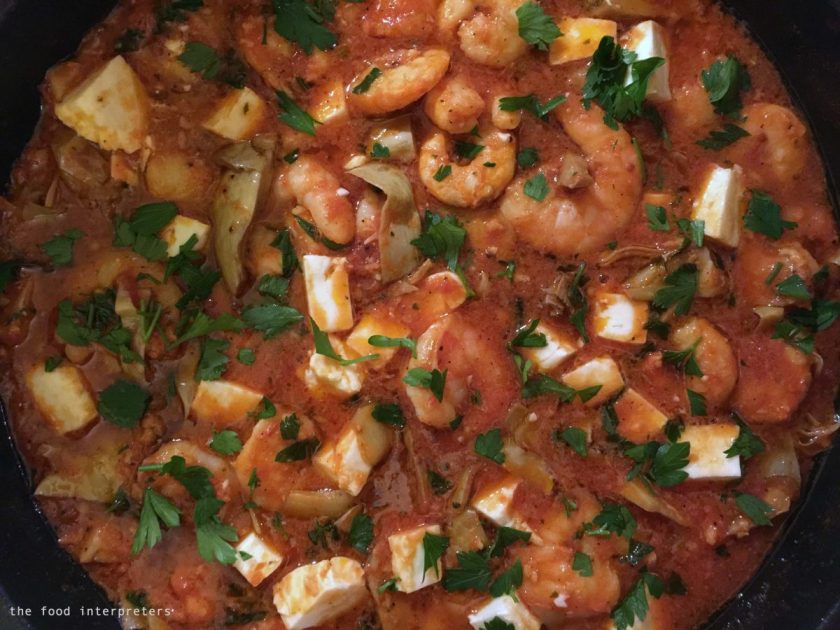
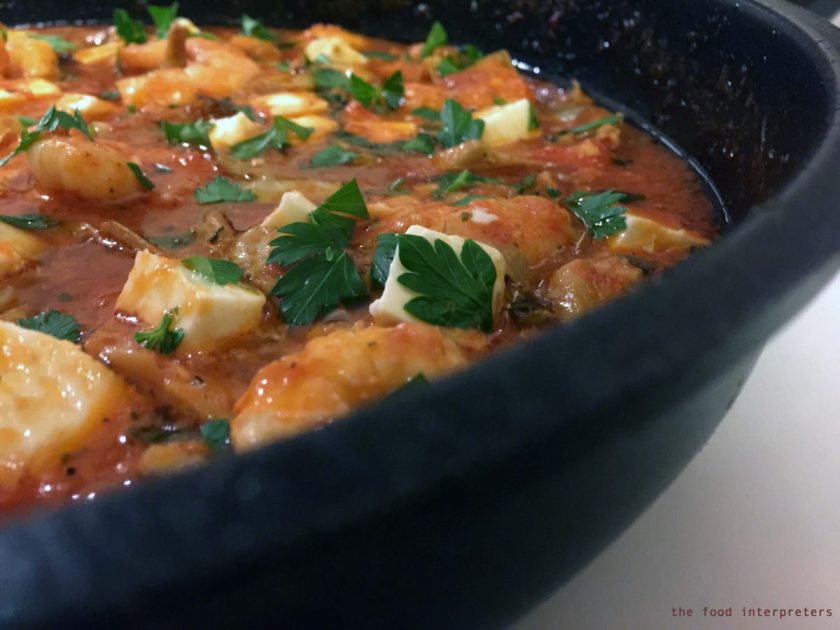
Did you have a frantic Saturday? Are you dreaming of a glass of New Zealand sauvignon blanc and a quiet evening at home? If yes why not prepare some pasta with this easy and festive sauce? I found it in my mother-in-law’s handwritten recipe book and can see why this is one of my husband’s favourites. Just be cautious to use the most tender artichokes you can find, because otherwise they can destroy the dish (and give anybody a reason to complain…)

shrimp, artichoke and feta pasta sauce

shrimp, artichoke and feta pasta sauce

Serves 4

  • 500g linguine or other long pasta
  • 500g  raw shelled frozen shrimps, very well defrosted
  • 1/2 cup olive oil
  • 1/2 tsp dried chilli flakes (optional)
  • 4 cloves of garlic, minced
  • 1 Tbsp ouzo
  • 1 cup jarred marinated artichoke hearts in olive oil, drained and quartered
  • 250g tomatoes, blanched, peeled and pureed (or grated canned tomatoes)
  • 1/4 tsp sugar (optional, depending on the acidity of the tomatoes)
  • 2 Tbsp parsley, finely chopped (plus some more for garnishing)
  • 1 pinch of dried oregano
  • 1 Tbsp lemon zest
  • 1 cup feta cheese, cut in 1cm cubes
  • sea salt and freshly ground black pepper

Heat the olive oil in a wide saucepan over medium heat. Add the dried chilli flakes (if using) and the garlic and cook for 30 seconds, stirring constantly.Add the ouzo and after 1 minute add the defrosted shrimps and cook for 30 seconds on each side. Transfer the shrimps to a plate and set aside.

Add the artichokes, tomatoes, sugar (if using),parsley, oregano and lemon zest and cook for 2 more minutes.

Remove from the stove and add the shrimps, the cubed feta cheese and season with sea salt and freshly ground black pepper. Keep warm.

In a large pot of boiling salted water, cook pasta according to package instructions. Drain the pasta into a colander.

Toss the pasta with the sauce. Sprinkle with some chopped parsley and serve immediately.

shrimp, artichoke and feta pasta sauce

shrimp, artichoke and feta pasta sauce


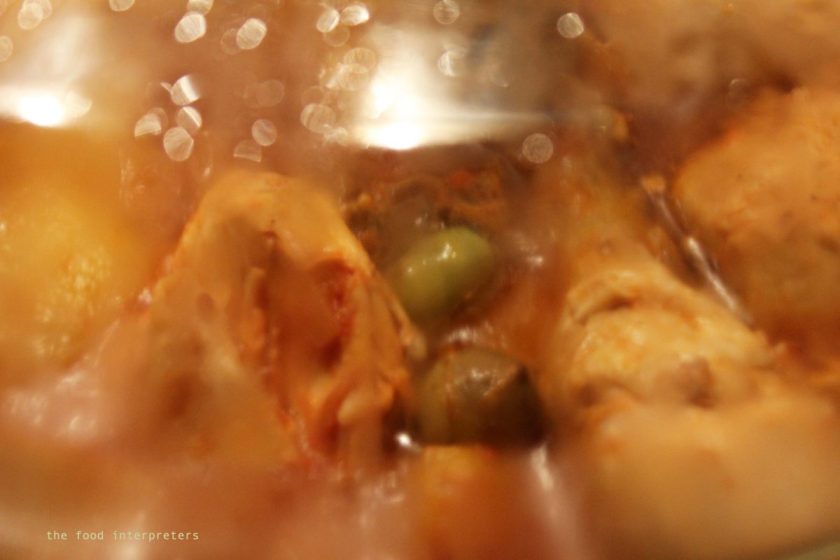
chicken with crushed green olives

Chicken with (fresh crushed) green olives

This is a dish we prepare in autumn with chicken or pork, while the olives are still fresh and bitter. It is a recipe that my grandmother brought form Asia Minor. We cook it with fresh crushed green olives but you can substitute with regular green olives you can easily buy. We prepare our crushed olives end of October. We crush the olives with a stone and put them in a brine. Depending on your tolerance on bitterness you can have them in three to ten days. You can also put them in olive oil and store them, but we think that they loose their spark if kept more than 2-3 months.

Serves 6

  • 1 whole chicken (about 2kg), cut in 8 pieces
  • 1 cup olive oil
  • 1/2 tsp dried red chilli flakes
  • 500g onions, finely chopped
  • 3 cloves of garlic, peeled and finely chopped
  • 1 cup dry white wine
  • 2 cups tomatoes, grated or pureed
  • 1 tsp sugar (depending on the acidity of the tomatoes)
  • 1/2 cup warm water (or more if necessary)
  • 250g green olives (fresh crushed if possible…)
  • 600g potatoes, peeled, cut in half lengthwise and in 1cm slices
  • sea salt to taste
  • freshly ground black pepper to taste
chicken with crushed green olives

chicken with crushed green olives

Heat half the quantity of the olive oil in a wide saucepan over medium-high heat. Place the chicken pieces in a single layer, sprinkle with one small pinch of salt and some ground black pepper and brown them well on all the sides. Remove the chicken pieces and put them in a bowl.

Add the rest of the olive oil in the pan, add the chilli flakes and the onion and cook for about 7 minutes until soft and translucent, stirring regularly. Stir in the garlic and the prepared chicken and cook for one more minute. Add the white wine, reduce the heat to medium-low and let simmer for 2-3 minutes. Add the tomatoes with the sugar.Return the chicken pieces to the saucepan, add half cup of warm water, cover and cook over  low heat, turning the chicken in the sauce a few times during cooking until the chicken is cooked through, about 50 minutes.

Remove the chicken pieces from the saucepan and put them in a bowl. Keep warm.

Add the potatoes and the olives and let simmer for about 40-45 minutes until the potatoes are cooked. Season with salt and pepper to taste, considering that the olives might be rather salty . Add the chicken pieces and cook for 10 more minutes so flavours  can blend, turning the chicken in the sauce a few times.


olive harvest

Olive oil and the Salt of the Earth

A family member is an olive oil zealot. She keeps an olive grove and produces small quantities of olive oil to perfection. She has a mastery over the process from beginning to end and makes no consents to comfort. She spares no cost and redeems all favours during harvest in November. For these few days she turns from the easy-going and agreeable person she is to a warden of iron feast – and that we can attest. This year even our toddler picked his first olives, to his great delight and everybody else’s.

But the result is proportional to the determination. After same day harvest and pressing the zealot turns modest, but with the content of the old master who knows that her work cannot be bettered.

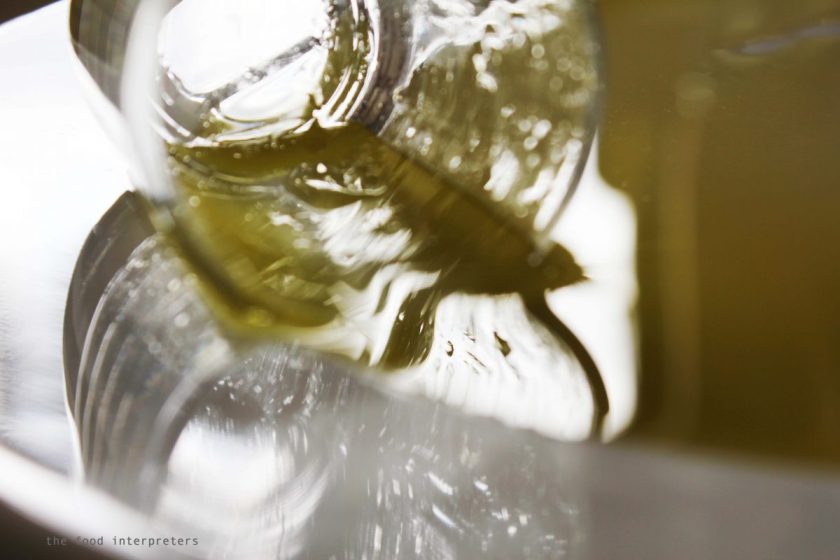
fresh olive oil

fresh olive oil

For those of you who (like me in the past) have not tasted fresh cold pressed olive oil of the best quality, let it be known that the distance from the stuff you get even in the good delis is similar to that of an ok wine to a French grand cru of Bordeaux. Especially at the beginning it tastes more like the slightly bitter juice it is, unlike the blunt industrialised well-intended gentrified bottled products.

fresh olive oil

fresh olive oil

The proper way to sample the fresh olive oil is on boiled potatoes. After we have appreciated the new production we like to taste it on fresh white sourdough bread  with a little coarse salt and dry oregano. What a great way to appreciate the phrase ‘the salt of the earth’; the Mediterranean tradition is full of olive trees.

fresh olive oil

fresh olive oil