Latest Posts

tomato and watermelon gazpacho

Tomato and Watermelon Gazpacho

When we are staying in our summerhouse in Anavyssos, (about 50kms from Athens, on the Saronic Gulf) we almost feel compelled to use local products. In the summer the population doubles in Anavyssos and the beaches get packed with  day trippers from Athens. Nevertheless stubbornly and somehow out of context we navigate through the Touristenströmung to local  farmers and cheese producers to source our daily ingredients. The last time we visited one of the producers for vegetables, he offered us a watermelon.

Here is the result: tomato and watermelon gazpacho.

tomato and watermelon gazpacho

tomato and watermelon gazpacho

Serves 8

For the Gazpacho

  • 2kg ripe tomatoes, blanched, peeled and roughly chopped
  • 400g watermelon flesh, deseeded and roughly chopped
  • 3 garlic cloves, peeled and roughly chopped
  • 150g onion, roughly chopped
  • 50g celery, leaves and stalks roughly chopped
  • 150ml tomato juice
  • 10g basil leaves
  • 2 Tbsp red wine vinegar
  • 200ml extra virgin olive oil
  • 3/4 tsp sea salt
  • freshly ground black pepper

To serve

  • croutons or bread in small cubes
  • cucumber, cut into small cubes
  • feta cheese, cut into small cubes
  • watermelon flesh, deseeded and cut into small cubes
  • basil leaves

Place  the tomatoes, watermelon, garlic, onions, celery, tomato juice, basil, salt and freshly ground black pepper in a food processor or in a large bowl if using a hand blender. Blend until smooth and then gradually add the vinegar and the olive oil with the blender still going.

Refrigerate until needed.

To serve pour the chilled soup into individual bowls and top with croutons or cubed bread, feta, cucumber, watermelon and some basil leaves.

tomato and watermelon gazpacho

tomato and watermelon gazpacho

Gemista (Stuffed Vegetables)

Gemista in greek means ‘stuffed’, and the most common vegetables to stuff are tomatoes and green peppers. We can however argue that Gemista was a popular dish, with the same name, before tomatoes and peppers were introduced to Europe after the discovery of America. They probably stuffed eggplants, that were introduced by the Arabs in the middle ages, and vine leaves. Rice was available in Greece ever since the soldiers of Alexander brought it home from Asia, so it could be used in the stuffing.

We can deduce that Gemista have existed at least since the 15th century, because poor Gemistos, a byzantine scholar and teacher had to change his name to the more archaic “Pletho’. How can you keep your academic dignity, if you are named after stuffed vegetables?

gemista

Serves 8
The vegetables
  • 5 tomatoes, ripe but firm
  • 8 green bell peppers
  • 3 sweet red long peppers
  • 20 vine leaves
  • 3 large onions (make about 10 stuffed onions)
  • 2 medium potatoes, cut into thin wedges

The rice filling

  • 500g white middle-grain rice (risotto rice), raw
  • 4 cups pureed tomatoes
  • 1,5 tsp sugar
  • 400g onions, minced
  • 1,5 cup mint, finely chopped
  • 1,5 cup parsley, finely chopped
  • 1 cup extra virgin olive oil
  • 1,5 tsp salt
  • freshly ground black pepper

The sauce

  • 1kg very ripe, peeled and deseeded tomatoes, pureed
  • 1 tsp sugar
  • 1 cup extra virgin olive oil

For the vegetables

Onions
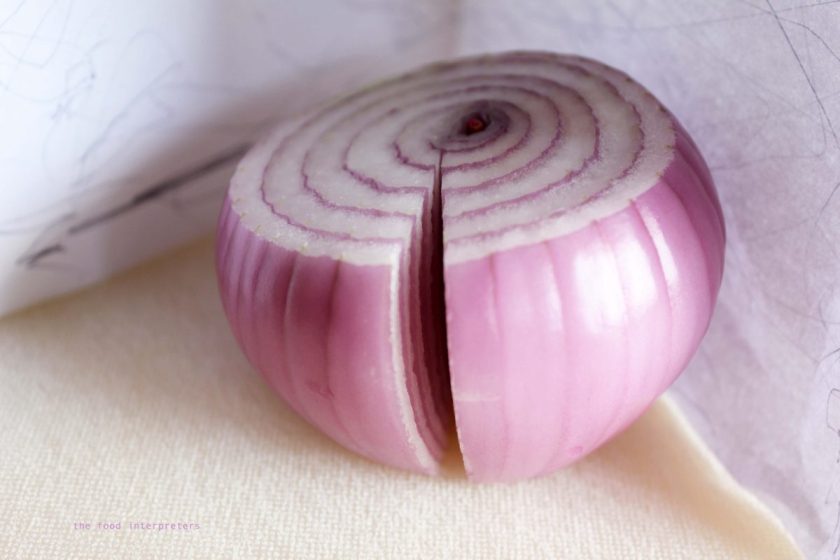
stuffed onions

stuffed onions

Cut off the very top and bottom of each onion.Discard the outer dry shell and make a cut down one side of each of the onions, cutting into the centre from top to bottom. Fill a deep saucepan with water enough to cover the 3 large onions, bring to a boil and let simmer for about 20 minutes until softened. Remove and let drain.

onion layers, for stuffed onions

onion layers, for stuffed onions

Let cool and carefully separate the onion layers. Reserve the middle parts of the onions,  that can’t be stuffed, for the filling.

Vine leaves

blanched vine leaf

blanched vine leaf

If you use jarred vine leaves, rinse them under tap water and let them drain.

If you use fresh vine leaves, remove any stems and wash them thoroughly. Blanch them in hot boiling salted water for about 2-3 minutes. Remove with a slotted spoon and let them drain. Once cool enough to handle separate them carefully. Let aside.

Tomatoes and peppers

gemista

Cut off the tops of the tomatoes, leaving 1 corner still attached to create a lid. Carefully scoop out the flesh with the aid of a sharp knife and a spoon. Reserve the tomato flesh for the filling. Rub the cavity and top of each tomato with some sugar with your fingertips.

Cut off the top of the peppers and remove seeds and membranes. Once deseeded keep the inside of 3-4 peppers. We will use the soft parts in the filling.

The potatoes
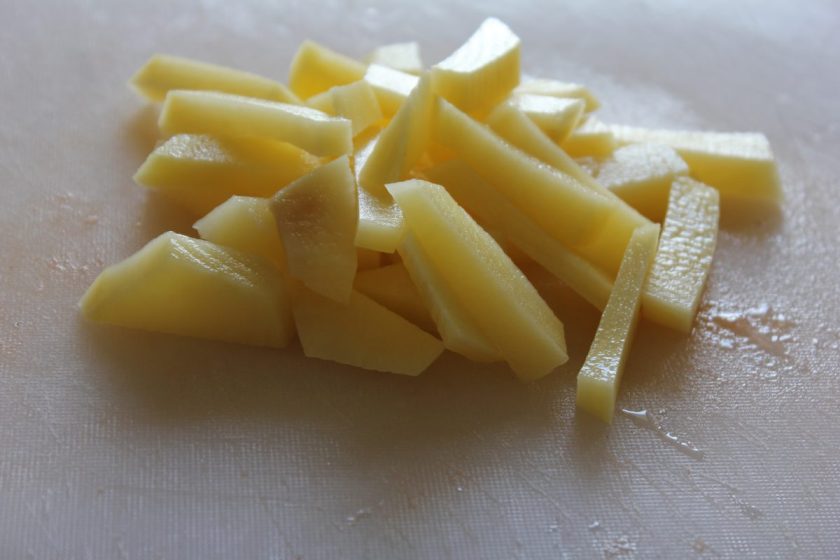
thin potato wedges

thin potato wedges

Peel and cut the potatoes in thin wedges. Sprinkle with some salt and pepper and put aside.

The filling

Blend the tomato flesh and two more peeled tomatoes with 1,5 teaspoon of sugar, the soft parts of the pepper insides and the middle parts of the boiled onions in a food processor until smooth. In a large bowl combine the blended tomato mixture, the rice, the minced onions, the mint, the parsley, the olive oil and the salt and pepper.

The stuffing

stuffed vegetables, yemista

stuffed vegetables, yemista

Using a spoon fill the tomatoes and peppers up to 2/3 , replace their tops and arrange them in a large and deep baking tin.

To fill the onions, take one onion layer and put a heaped teaspoon of the filling in one of the edges and roll tightly. Repeat with the rest of the onion layers.
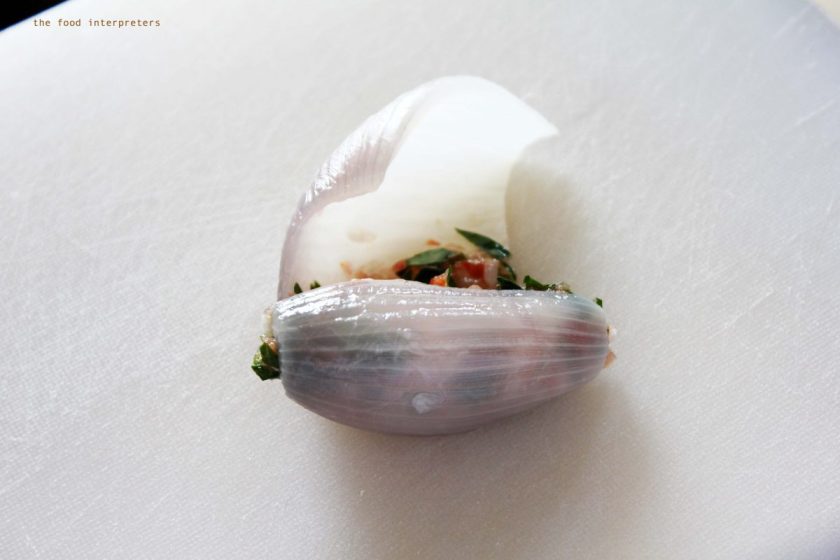
stuffed onions

stuffed onions

stuffed onion

stuffed onion

To fill the vine leaves

Place one vine leaf on a flat surface and add 1 tsp of the filling near the stem.
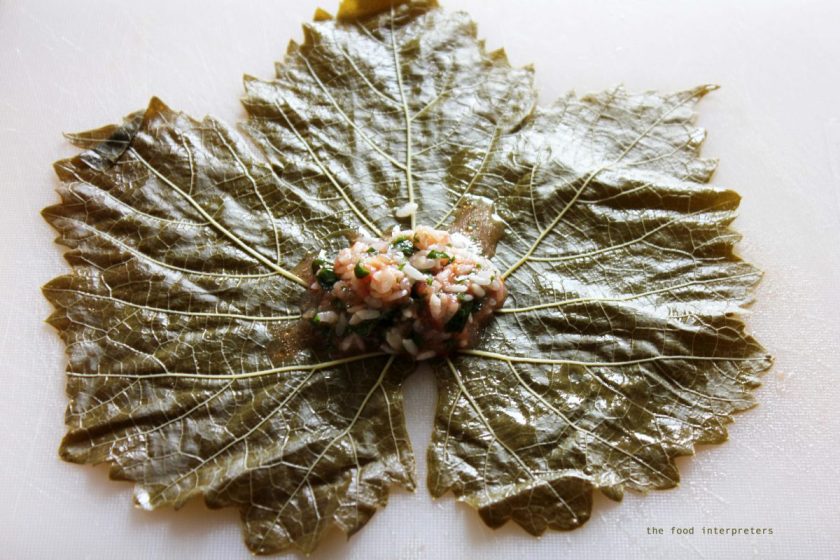
stuffed vine leaves

stuffed vine leaves

Fold the lower sides of the leaf towards the centre.
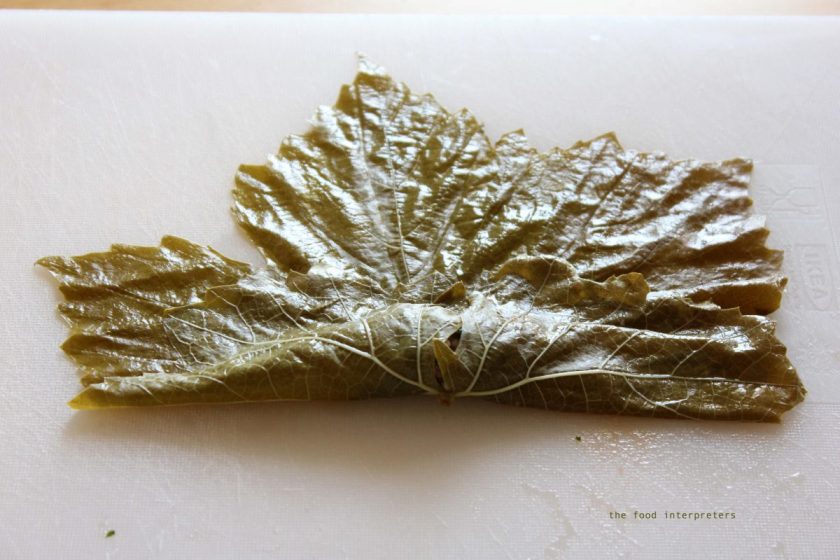
stuffed vine leaves

stuffed vine leaves

Fold left and right sections of the leaf towards the centre and roll up tightly. Repeat with the rest of the vine leaves.
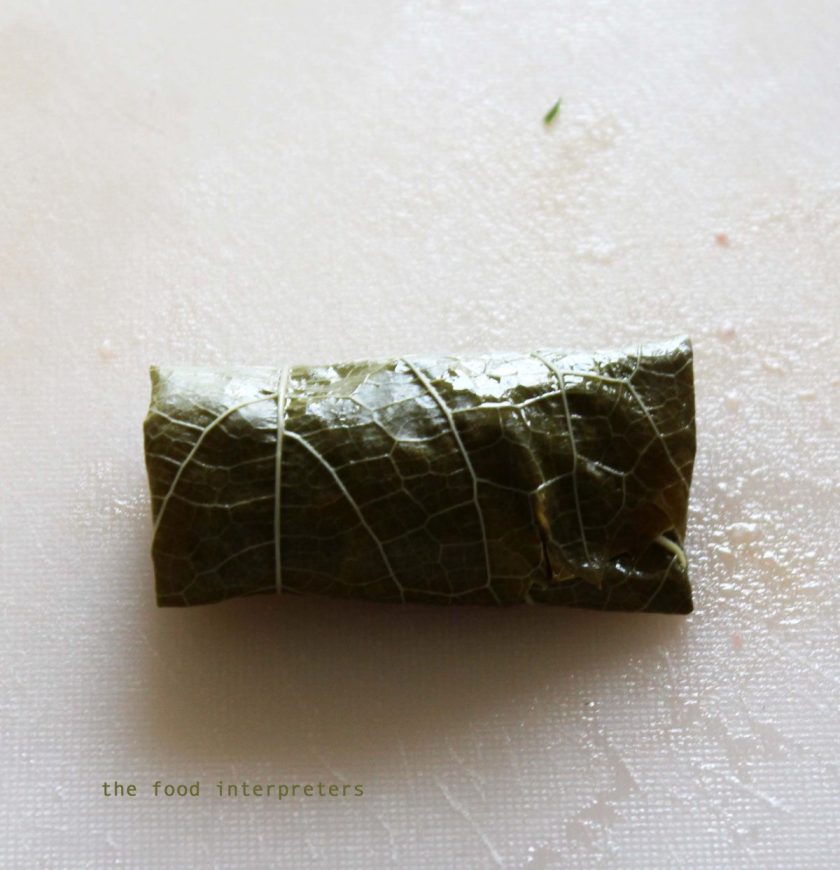
stuffed vine leaves

stuffed vine leaves

Arrange the stuffed onions, the stuffed vine leaves and the potato wedges amongst the tomatoes and peppers, tightly in the baking tin.

Preheat the oven to 180ºC. (fan)

gemista

Season generously with salt and pepper. Combine the pureed tomatoes with 1 teaspoon sugar and 1 cup of olive oil and toss over and around the vegetables.

Bake for around 1 hour and 45 minutes to 2 hours, until the potatoes and the rice filling are fully cooked, and the vegetables are golden brown on top.

Serve at room temperature with feta cheese.

greek stuffed vegetables

greek stuffed vegetables

greek stuffed vegetables

greek stuffed vegetables
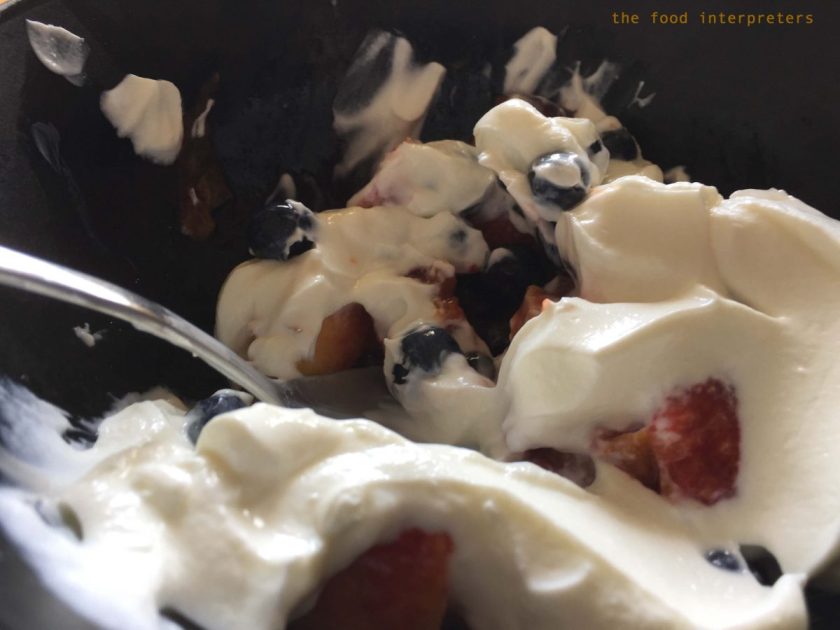
Greek Mess, in a good sense

This is not Eton Mess – it is Greek Mess in a good sense. Eton Mess is probably more relevant right now, but a Greek Mess is always possible.

It is the Mediterranean summer now, and it is hotter than usual. This means that it is a good idea to have something light and cold for lunch. Our favourite is greek low fat (2%) yogurt with fruit. You can combine any fruit you want, but our combination for this summer is peach and blueberries. They have to be very cold and of the best quality, of course.

Serves 1

  • 200g low fat (2%) strained greek yogurt
  • 1 peach, cubed
  • 10 blueberries

Place all the ingredients in a bowl and enjoy!

mess2

Grilled Sardines Greek Style

Full of Omega 3,  without the mercury and very affordable. That is the power of sardines. Of course, you have to like them – and not everybody does. In any case the smell of grilled sardines is inexorable connected to the Mediterranean summer. We like them slightly “overgrilled”. Do not let the blackness of the grilled fish put you off, it adds extra flavour.

Serves 2

  • 250g sardines, cleaned,gutted, scales and heads removed
  • 160g onion, finely sliced
  • 2 garlic cloves, finely sliced
  • 200g potatoes very finely sliced
  • 1 cup parsley, finely chopped
  • 225g tomatoes, peeled and deseeded
  • 1/4 tsp sugar
  • 1/2 tsp dried chilli flakes (optional)
  • 10 cherry tomatoes, halved
  • 2 Tbsp capers
  • 2 pinches dried oregano
  • 1/2 cup olive oil
  • salt and freshly ground black pepper
  • 1 cup water (or more if needed)

Preheat your oven grill to high temperature.

Wash and drain the sardines on paper towels.

sardines

Blend the peeled and deseeded tomatoes with the sugar in a mini food processor until smooth.

Arrange the onions, garlic, potatoes and sardines in a baking dish large to fit the sardines  in one layer. Spread the pureed tomatoes over the sardines. Sprinkle with the dried chilli flakes  (if using) and chopped parsley. Add the olive oil, the water, season with salt and pepper and arrange the halved cherry tomatoes on top.

sardines

sardines

Place on the second shelf in your oven (not very close to the grill) and grill for about 10-12 minutes. Turn over the sardines and the potatoes, add the capers and the oregano and some more water if needed. Grill for another 15 minutes or even more if you like your sardines “slightly overgrilled” like we do!

sardines

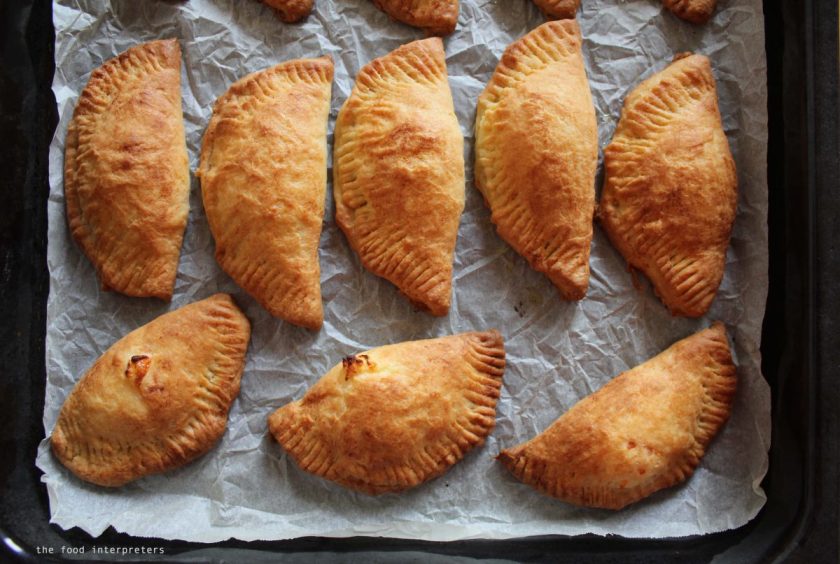
kourou cheese pies

Mini “Kourou” Cheese Pies

In terms of taxonomy ‘tyropita’ (cheese pie) is a family. It has two genera, depending on the type of surrounding dough – kourou or filo. Filo is the thin pastry you can buy, or, if you feel more courageous, prepare by yourself. Kourou dough by default contains yogurt or milk, is thicker, and more straightforward to make. The kourou variety is a common snack that children have in school and overprotective mothers pack for adolescents to have when traveling with boats to summer holidays. Here is our version:

Makes about 20 mini cheese pies

  • 300ml extra virgin olive oil
  • 300ml buttermilk, lukewarm
  • 8g dry yeast
  • 580g all purpose flour
  • 1 pinch of salt
  • 250g feta cheese, crumbled
  • 150g anthotiro cheese (or ricotta), crumbled
  • 70g gruyère cheese, grated
  • 1 egg
  • 1/4 tsp ground nutmeg
  • freshly ground black pepper
  • 2 Tbsp milk and 2 Tbsp olive oil for glazing
  • sesame or nigella seeds (optional)

In a bowl combine the sifted flour and the salt. In another large bowl dissolve the yeast in the lukewarm buttermilk, add the olive oil and mix well. Gradually add the flour to the liquid mixture and mix with a spoon or a spatula. When almost all your flour has been added knead with your hands until your dough becomes soft and just a little bit sticky.

Preheat the oven to 180ºC (fan)  and line a baking tray with baking parchment.

In a bowl add the crumbled feta, anthotiro, grated gruyère, egg, nutmeg and black pepper and mix with a fork.

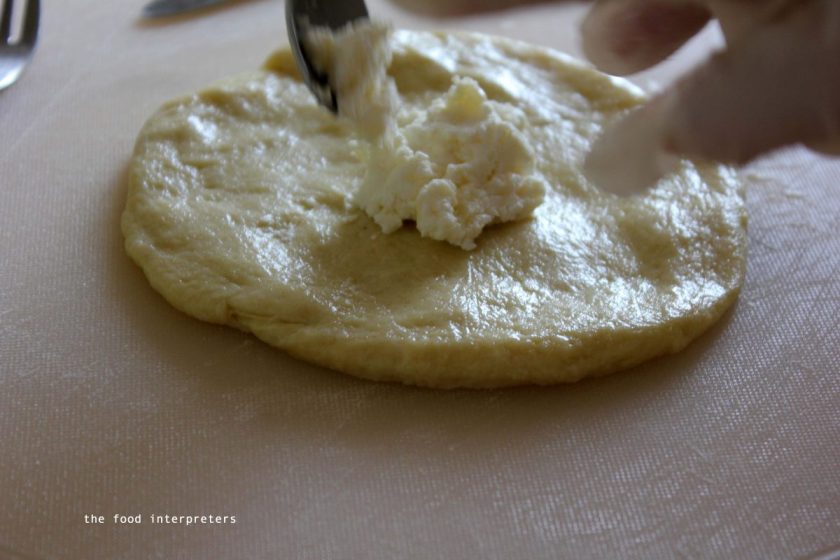
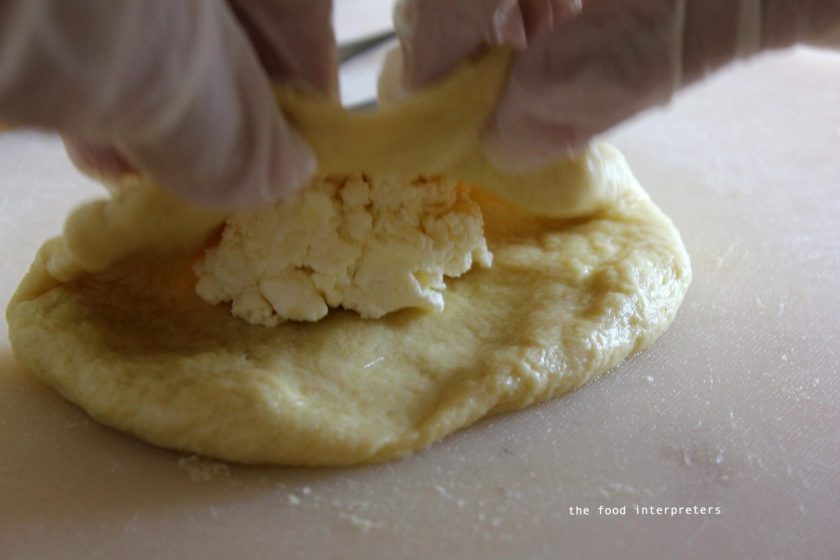
Cut little balls of  dough in the size of apricots. Flatten with your palm on a lightly floured surface into small round thin discs. Place a teaspoon full of the cheese filling in the center of the disc and fold to close, making a half moon shape.

add a spoon full of the filling

add a spoon full of the filling

fold to close, making a half moon shape

fold to close, making a half moon shape

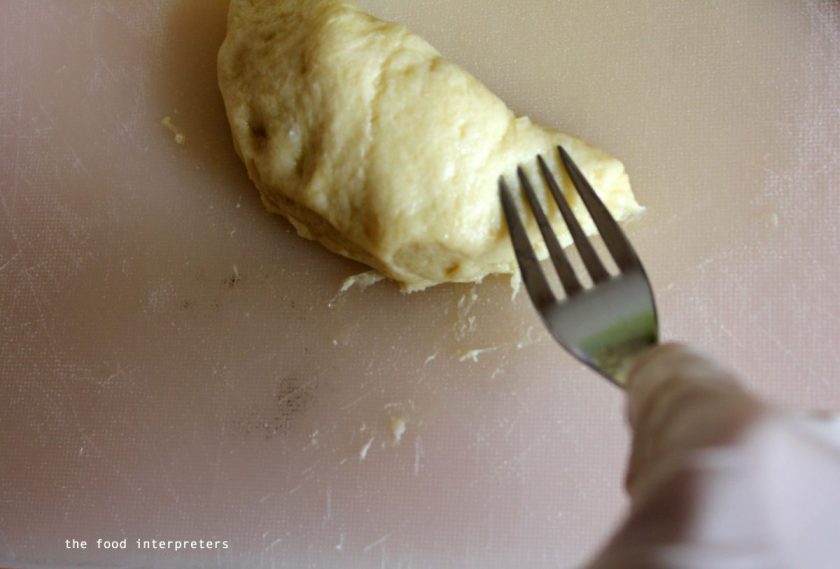
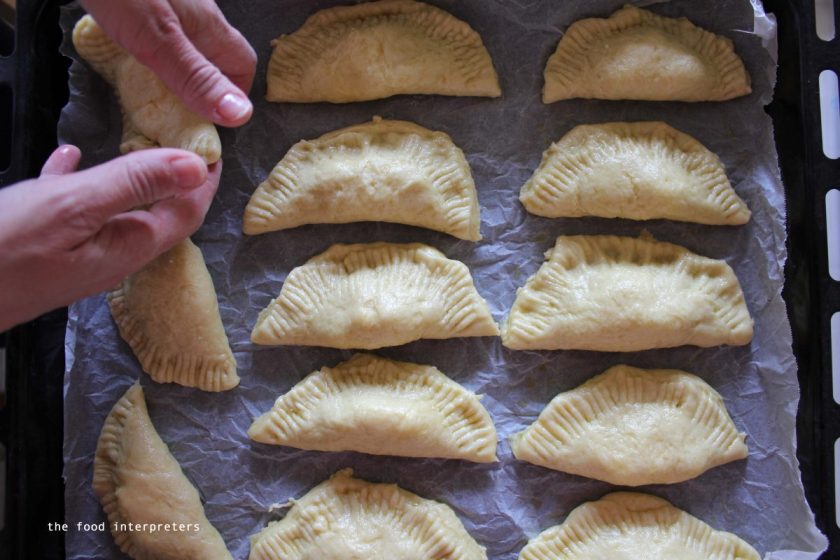
Use a fork to seal the edges and transfer to the baking tray. Repeat with the rest of the dough and filling.

use a fork to seal the edges

use a fork to seal the edges

transfer to the baking tray

transfer to the baking tray

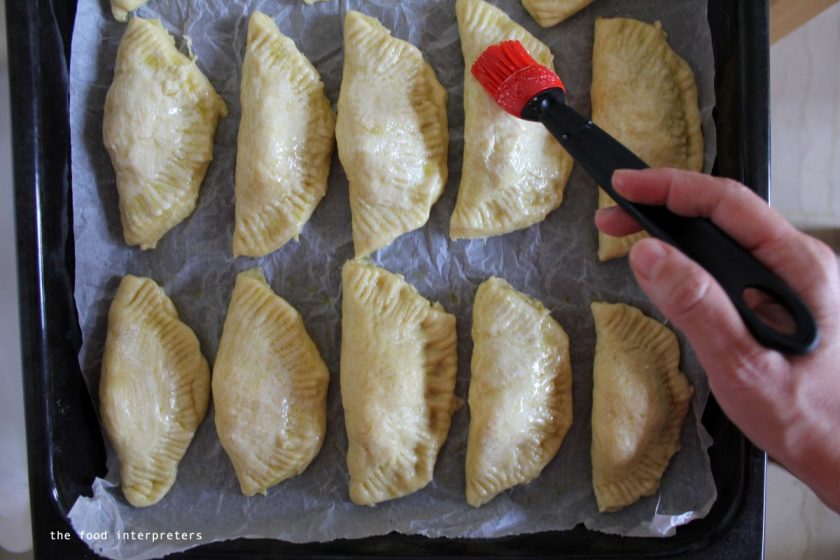
In a small bowl combine the milk and the olive oil and brush the tops of the cheese pies and sprinkle with the sesame or nigella seeds, if using.

brush the tops of the cheese pies

brush the tops of the cheese pies

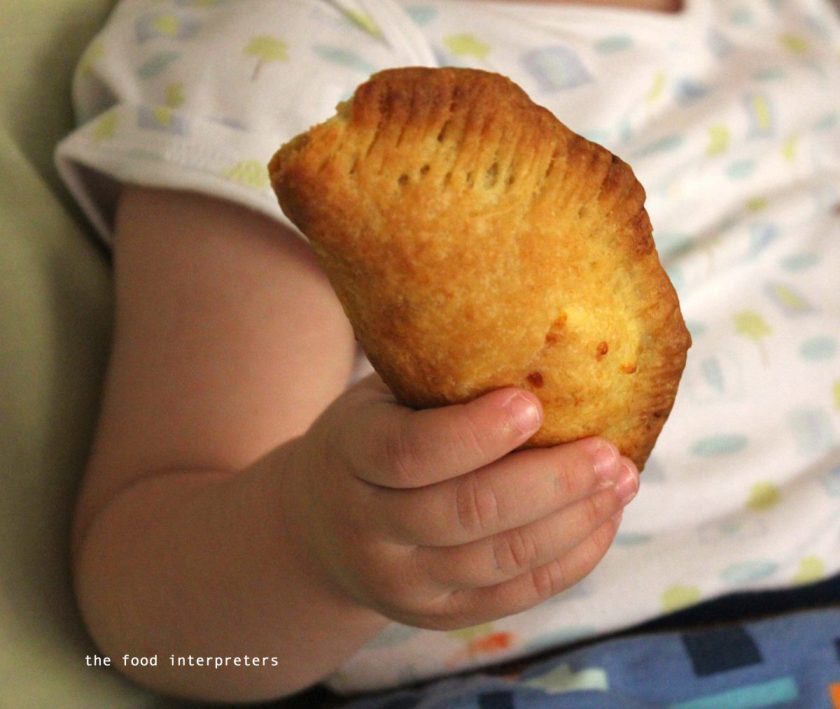
Bake for about 25 minutes in the middle rack of your oven until golden. Serve warm or in room temperature.

mini kourou cheese pie

mini kourou cheese pie


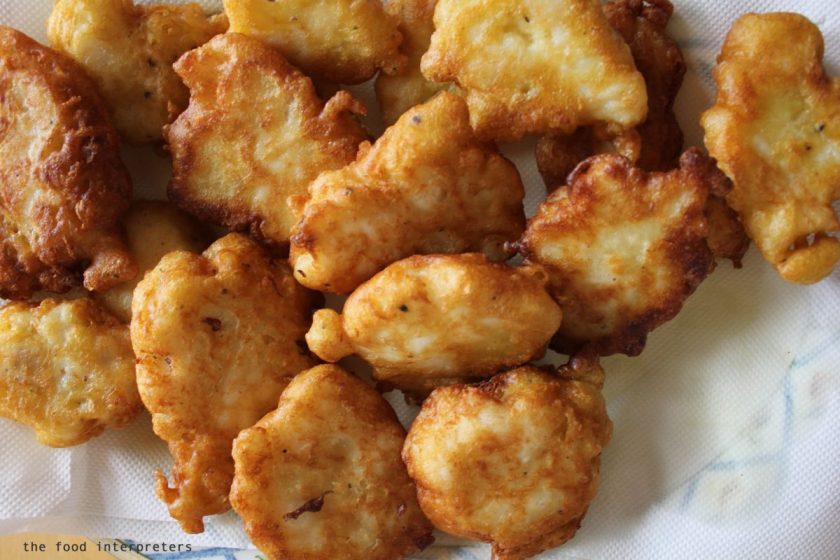
salt cod fritters

Salt Cod Fritters (Bakaliaros Skordalia)

Bakaliaros skordalia (salt cod fritters with bread garlic sauce) is sort of greek national institution. You have it on National Day and Palm Sunday, both in spring. You associate it with blue sky, parades and childhood memories – until you have to carry your own toddler to the parade.

The deep fried bakaliaros and the garlic in skordalia make a tastebomb. It is also a game theory dish. Equilibrium is reached when everybody have it and can bear each other’s garlic consumption.

We like to have it the whole year round and for some time we were in the quest for the perfect recipe. After experiments involving soda siphons Blumenthal style, I think we found our definite answer to bakaliaro perfection in an adaptation of Argiro Barbarigou’s recipe. Here it is:

salt cod fritters

salt cod fritters

Serves 4-6

For the salt cod fritters (bakaliaros)

  • 1kg salt cod fillet, desalted
  • 260g all purpose flour
  • 1/2 tsp salt
  • 1/2 tsp sugar
  • 2 tsp baking powder
  • 330ml beer
  • 20ml ouzo
  • olive oil for frying

To desalt the cod (24-36 hours in advance)

Rinse the excess salt from the cod, place in a large bowl, cover it with cold water and soak for 24-36 hours, changing the water every 6-8 hours.After the first 24 hours keep refrigerated. As soon as it is ready, dry well the fish with paper towels, remove the skin and all the bones and shred it finely with your hands. Keep refrigerated until needed.

(To avoid all this, you can always buy a deep frozen desalted cod. All you need is to defrost, remove the skin and finely shred it.)

To prepare the batter (1-2 hours in advance)

In a bowl combine the flour,salt, sugar and baking powder. Add the beer and the ouzo and whisk until everything is weldl combined. Add 2 ice cubes and refrigerate for 1-2 hours before using.

Mix the cod with the batter.

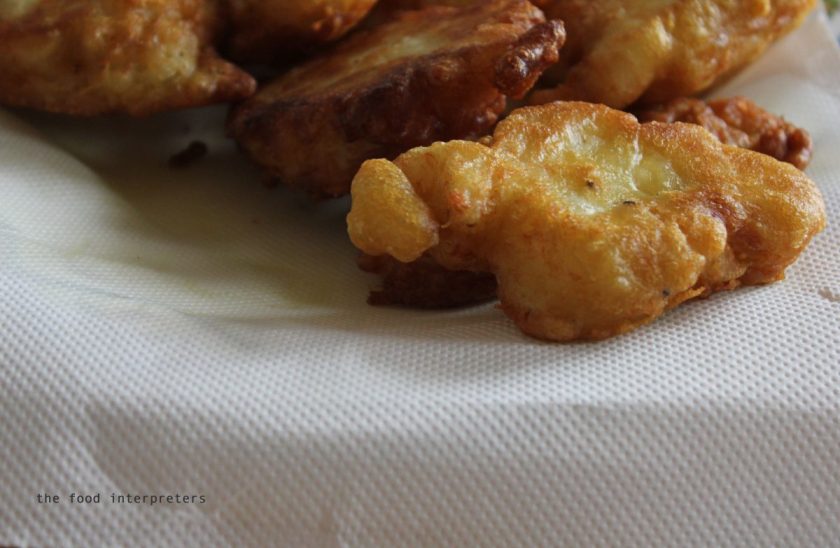
Heat the olive oil in a large frying pan over medium-high heat. When the oil is hot spoon the battered cod mix in the hot oil and fry for 2 minutes on each side until golden brown. Drain on paper towels. Fry the cod fritters in batches, so that the surface of the pan is comfortably filled.

Serve with the traditional greek skordalia (garlic bread sauce).

salt cod fritters

salt cod fritters

For the skordalia

  • 500g white bread, crusts removed, soaked in water and squeezed (1 or 2 days old sourdough bread works better for this recipe)
  • 6-8 cloves garlic, peeled
  • 200 ml extra virgin olive oil
  • 3-4 Tbsp white wine vinegar
  • 1 small pinch of salt

In a food processor combine the squeezed bread with the garlic, vinegar and salt. Blend, while adding the oil drop by drop, until the mixture becomes smooth.

lemon and saffron chicken

Pers-Mex Saffron and Lemon Chicken

With the exception of some amusing quotes of Herzog (‘Look into the eyes of a chicken and you will see real stupidity. … They are the most horrifying, cannibalistic and nightmarish creatures in the world’) and Russell’ s disturbing metaphor about the farmer  ‘who feeds the chicken every day throughout its life and at last wrings its neck instead’ , I am not aware of truly noteworthy appearances of chickens in literature or philosophy (the chicken – egg dilemma does not qualify) – in contrast to horses, wolves, wales, bears, tigers, cats, dogs and recently giraffes that feature heroically. 

On the other hand I know of several great recipes with chicken. The one that follows is definitely one. It combines persian, mexican and mediterranean elements. Enjoy it with a Gewurtztraminer.

Serves 2-3

  • 1tbsp lemon zest
  • 1 cup lemon juice
  • 300g onions, minced
  • 1 garlic clove, minced
  • 2 Tbsp olive oil
  • 200g strained greek yogurt
  • 1/4 tsp saffron , ground & dissolved in 2 TBS of hot water
  • 1 tsp turmeric powder
  • 1 tsp sea salt flakes
  • 3 chicken breasts (about 900g)

To serve

  • flour tortilla wraps
  • fresh salad leaves
  • cherry tomatoes
  • greek yogurt

For the marinade combine the yogurt, onion, garlic, saffron water, olive oil, lemon juice, lemon zest, turmeric and sea salt flakes in a big bowl. Coat all pieces of chicken completely with marinade. Cover with plastic wrap and refrigerate overnight or at least for a couple of hours.

Preheat your oven grill to high temperature.

Thread the chicken onto metal (or wooden) skewers and place under the hot grill turning often until chicken is cooked through and slightly charred, about 10-15 minutes.

Serve the grilled chicken in tortilla wraps  with chopped salad leaves of your choice, halved cherry tomatoes and some yogurt.

cheese pie

Another Cheese Pie

When it comes to cheese pie recipes there is no absolute optimum. It depends on your aspirations on the pie. To be honest ours were bland lately since we wanted our toddler to have some too, so no spicy or very salted cheeses. Starting from this healthy baseline and after a series of exhaustive experiments involving wine, dinners with friends and demanding family members we ended up to this version, which became our favourite.

For the cheese pie

  • 8 fillo pastry sheets
  • olive oil, enough to brush the tin and each one of the fillo sheets
  • 400g feta, crumbled
  • 200g fresh anthotiro cheese (or fresh ricotta), crumbled
  • 100g gruyere cheese, grated
  • 2 Tbsp parmesan cheese, finely grated
  • freshly ground black pepper
  • 2 eggs, beaten
  • 1 cup buttermilk

Serves 8-10

Preheat the oven to 180ºC (fan)

For this recipe you will need a large rectangular baking tin. Ours is 30cm x 40cm.

Keep the fillo pastry covered with a slightly damp kitchen towel during the preparation of the recipe so that it will not dry out.

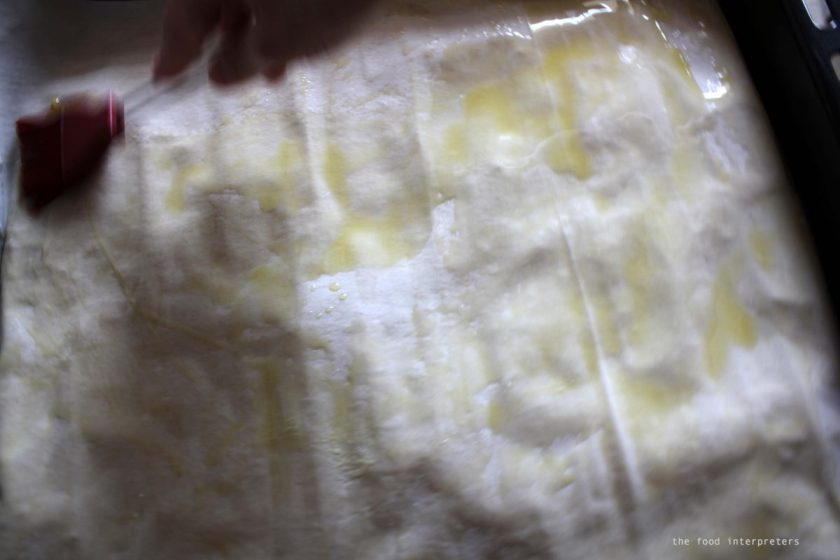
Brush the bottom and inner sides of the baking tin  with olive oil. Lay half the pastry sheets on the bottom of the tin, brushing each one with olive oil.

Arrange the crumbled feta, anthotiro or ricotta, gruyere and parmesan all over the pastry sheets, sprinkle with the freshly ground black pepper.

Fold the remaining part of the sheets inward to seal the filling and cover it with the remaining pastry sheets, brushing each one with olive oil.

cheese pie, the making of

cheese pie, the making of

Combine the beaten eggs with the buttermilk and pour all over the cheese pie. Prick all over the pie with a fork being careful not to reach the bottom of the tin and set aside to absorb the liquid for 15 minutes.

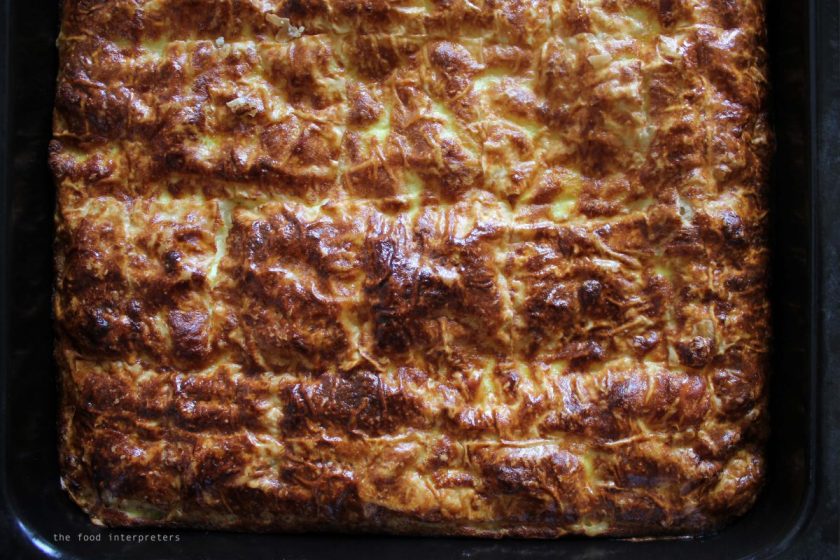
Bake on the lowest shelf of your oven for about 40 minutes until the fillo is golden and crunchy.

cheese pie

cheese pie

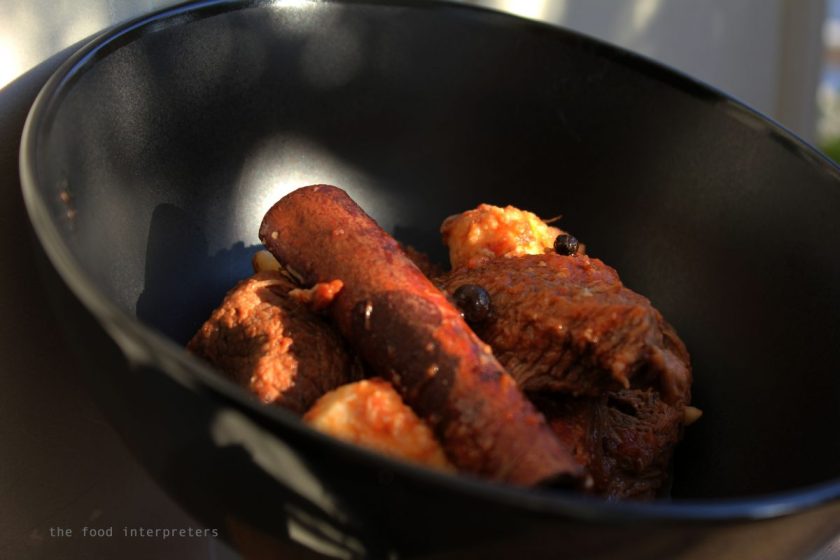
Zante beef, Sunday’s lunch.

The recipe comes from a lady called Rubina (Ruby). She was an old family acquaintance and lived in a house with echoing acoustics and a garden full of roses. She was from Zante and spent her married life in Athens. Her family was the best-off in the street and she was respected by the neighbours because of her charities during the war.

She passed this recipe to my grandmother who passed it to my mother and found its place in the Sunday lunch repertoire when I was a kid. It still is cooked when we visit the grandparents in their house with a garden full of hydrangeas and jasmines.

Zante Beef

Zante Beef

For the Zante Beef

Serves 6

  • 1 cup olive oil
  • 1,5kg good-quality stewing beef, cut into 3cm cubes
  • 150ml mavrodaphne, a sweet dark red wine from Patras
  • 75ml red wine vinegar
  • 3 allspice berries
  • 10 black peppercorns
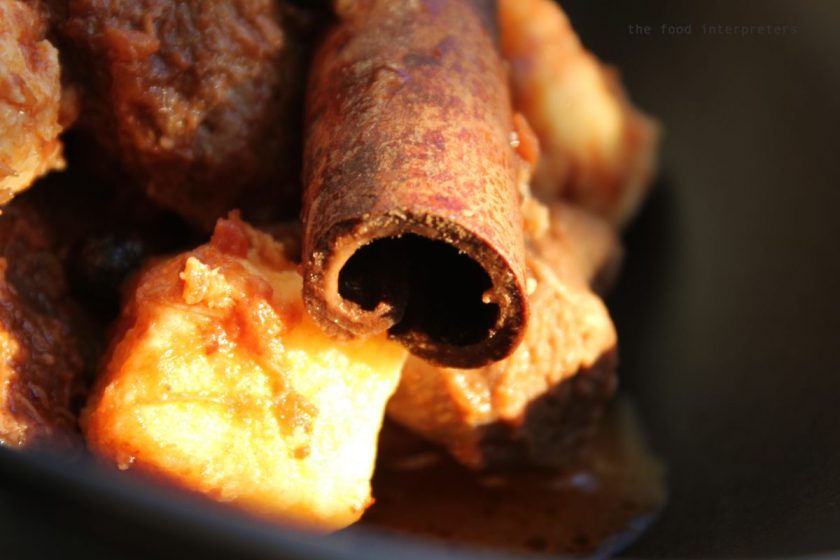
  • 1 cinnamon stick
  • 3 garlic cloves, peeled and finely chopped
  • 800g very ripe fresh tomatoes (or canned if not in season), peeled
  • 1 tsp brown sugar
  • 1/2kg pecorino cheese, cut into 2cm cubes
Zante Beef

Zante Beef

Heat 1/2 cup of the olive oil in a large saucepan over medium-high heat. Add the beef (in batches if needed, so that the temperature of the oil remains high) and sauté until browned on all sides. Add the garlic and stir constantly for 1 minute.

Pour in the mavrodaphne wine and the vinegar and reduce the heat to low- medium and let simmer uncovered for about 10 minutes.( We usually don’t add any water, but you might need to add 1 cup or less of warm water.)

In a mini food processor blend the tomatoes with the sugar. Add the tomatoes, the allspice berries, the peppercorns, the cinnamon stick and the remaining olive oil into the saucepan with the beef. Bring to a boil and then let simmer covered for about 1 hour or until the beef is tender and the sauce has thickened.

Add the cheese and let simmer uncovered for about 5 minutes. Be careful not to overcook the cheese, you don’t want it melted.

Take out the cinnamon stick (and the allspice berries-if you can find them!)  and serve immediately over rice or triple cooked french fries!

cinnamon

cinnamon

whole peeled tomatoes

whole peeled tomatoes

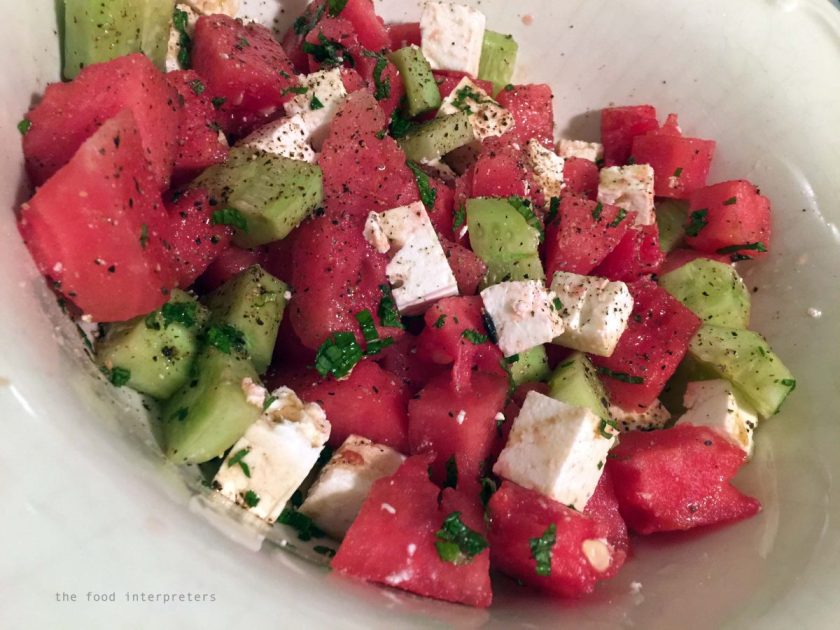
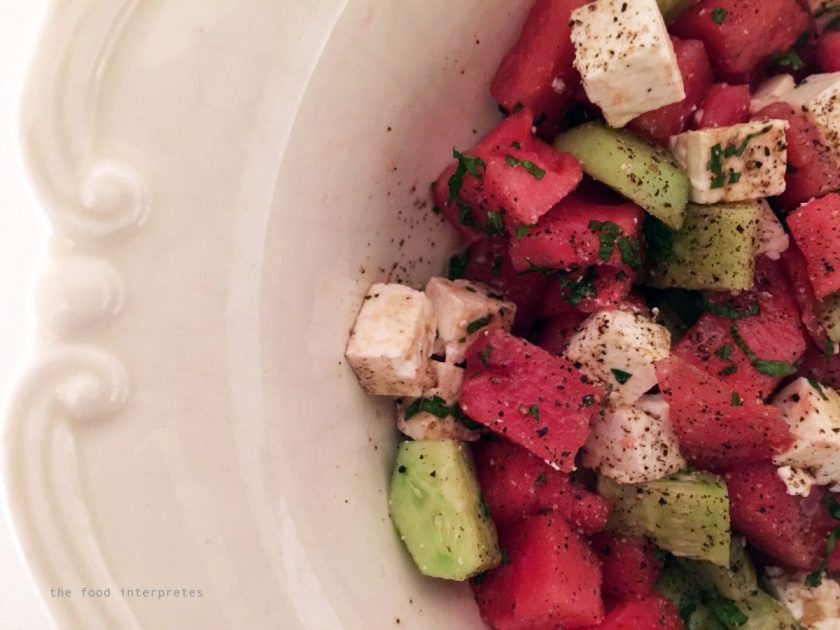
watermelon salad with feta

Eat Watermelon Salad with Feta

Not only is this easy to make summer salad very refreshing, but it contains 80% more light than other food, because of the watermelon. If it was not for the feta, it  would contain even more light. If you eat it you help release trapped light back to the cosmos – at least this is what a now extinct gnostic religion of the Late Antiquity, the followers of Mani,believed! It sounds even more bizarre than the Jedi Church, but the cult existed indeed. The last standing temple of the religion is in the southeast coast of China, transformed to a buddhist shrine now, and surrounded by watermelon plants I suppose.

Serves 2-4

  • 400g chilled watermelon, rind removed, desseeded  and cubed
  • 150g cucumber, peeled and roughly chopped
  • 100g feta, cubed
  • 1 Tbsp mint, finely chopped
  • 2 Tbsp extra virgin olive oil
  • 1 Tbsp balsamic vinegar
  • freshly ground black pepper
watermelon salad with feta

watermelon salad with feta

Place the watermelon, cucumber, feta cheese and mint in a large bowl.

Combine the olive oil with the balsamic vinegar, pour over the watermelon mixture and toss gently to coat.

Sprinkle with freshly ground black pepper and serve immediately.