Latest Posts

Singapore: beyond the chilli crab

You can try to understand Singapore by eating and making sense of it. The options (at least in cookbooks) are categorized as per ethnic group: Peranakan ( descendants of early Chinese migrants who settled in the Straits and married the native Malays), Teochew, Hokkie, Indian, Eurasian ( English influenced or Kristang – the Portuguese variety). As you would expect to happen in a city-state with a big expat community the influences keep criss-crossing all the time: fish head curry (created by Singapore’s Indians from Kerala with some Chinese and Malay influences) or afternoon tea with mooncakes are local favourites.  Have one bite and it’s like having watched three hours of BBC documentary.

The options are overwhelming, and the quality usually excellent.

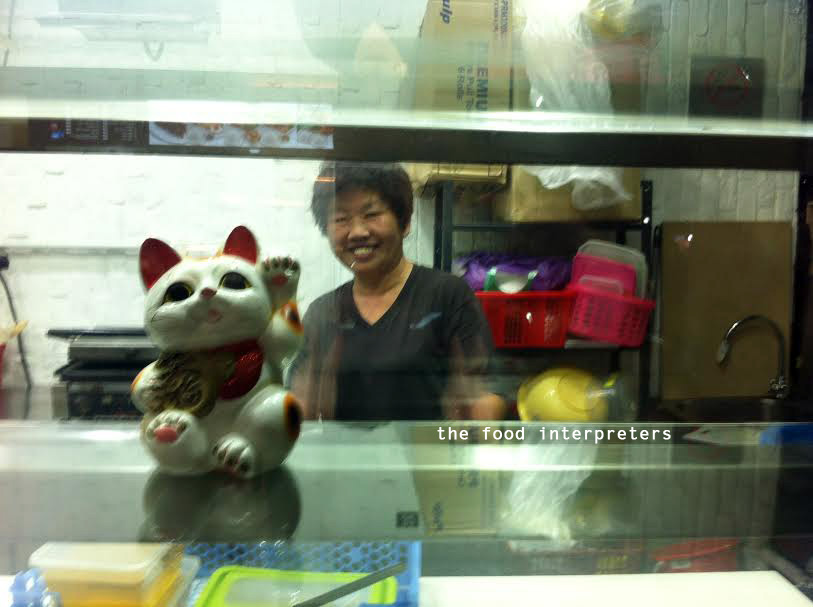
Hawkers in Singapore are sort of national institution. They offer cheap, clean and authentic food and tend to cluster. Besides the well-known hawker-centers you can find them in malls, by the seafront or just around the corner. The most typical hawker center is probably Lau Pa Sat, the old cast-iron market designed by the British in the 19th century. It’s within the central business district, surrounded by some pretty impressive modern architecture that hosts the regional headquarters of banks.
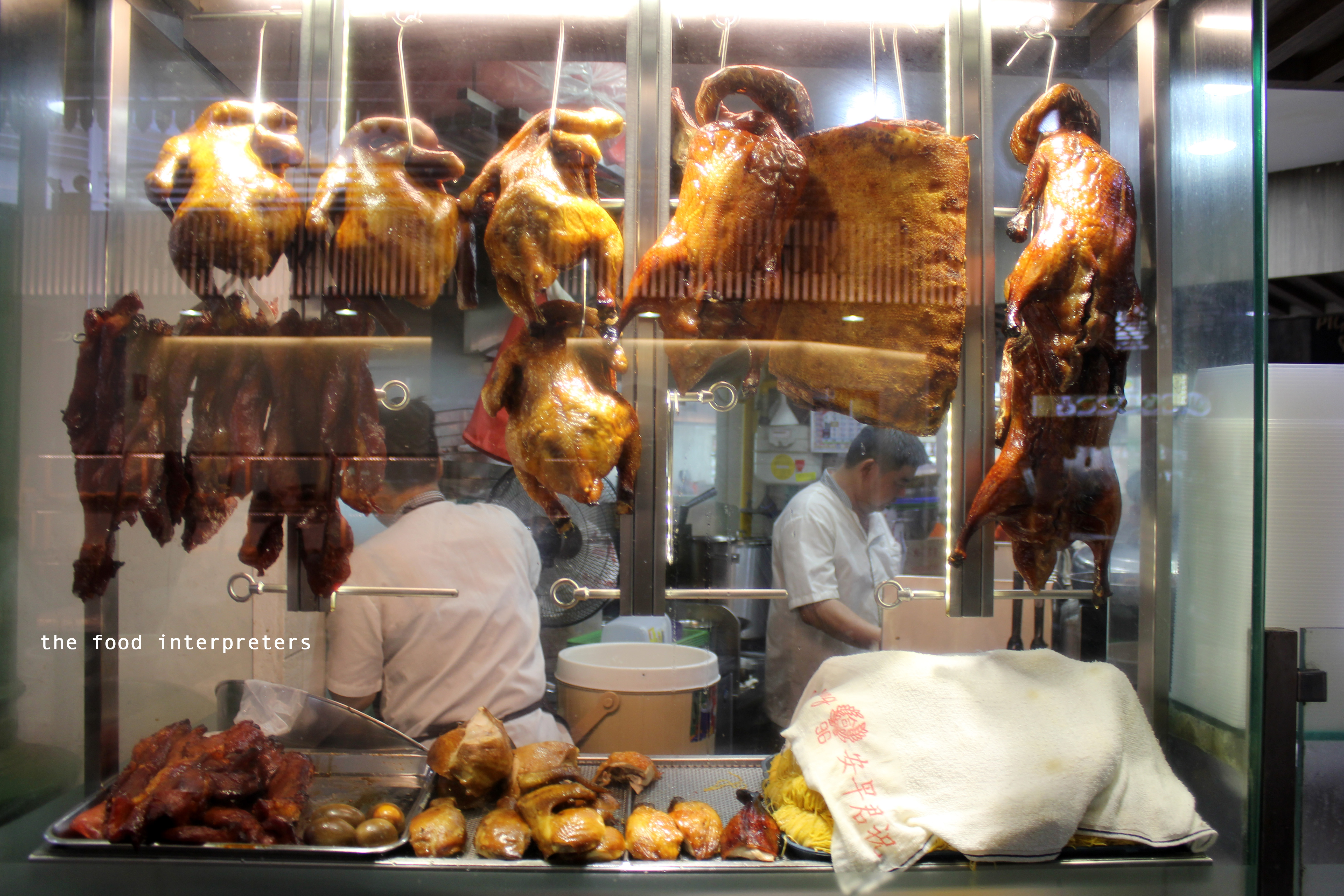
IMG_5083

h1 fi

h2

Besides street food and the chilli crabs (the typical dish of Singapore for non-locals) you can choose between some of the most refined restaurants in Asia, with great views to the Singaporean skyline or you can drink overpriced beer in roof bars with equally stunning views. Dumplings with truffle, foie gras macarons prepared by sophisticated sushi chefs to perfection without getting pompous – these are some of the dishes prepared for the demanding local clientele .

IMG_5254

You almost feel obliged to have a Singapore Sling in Raffles, a ‘Landmark colonial hotel known for its Singapore Sling cocktails & celebrity guests open since 1887’, where ‘Through the decades, liveried Sikh doormen have welcomed some of the most famous personalities, from writers to celebrities, politicians and members of royalty, such as the Duke and Duchess of Cambridge.’  Add to that description canned cocktails produced for masses of tourists from all over, synchronically moving fans like from a 40’s Hollywood swim musical in reverse, and you will have one of your most funny evenings out in town (at least until you see the bill).

This time we enjoyed Singapore with good local and expat friends.
IMG_5115

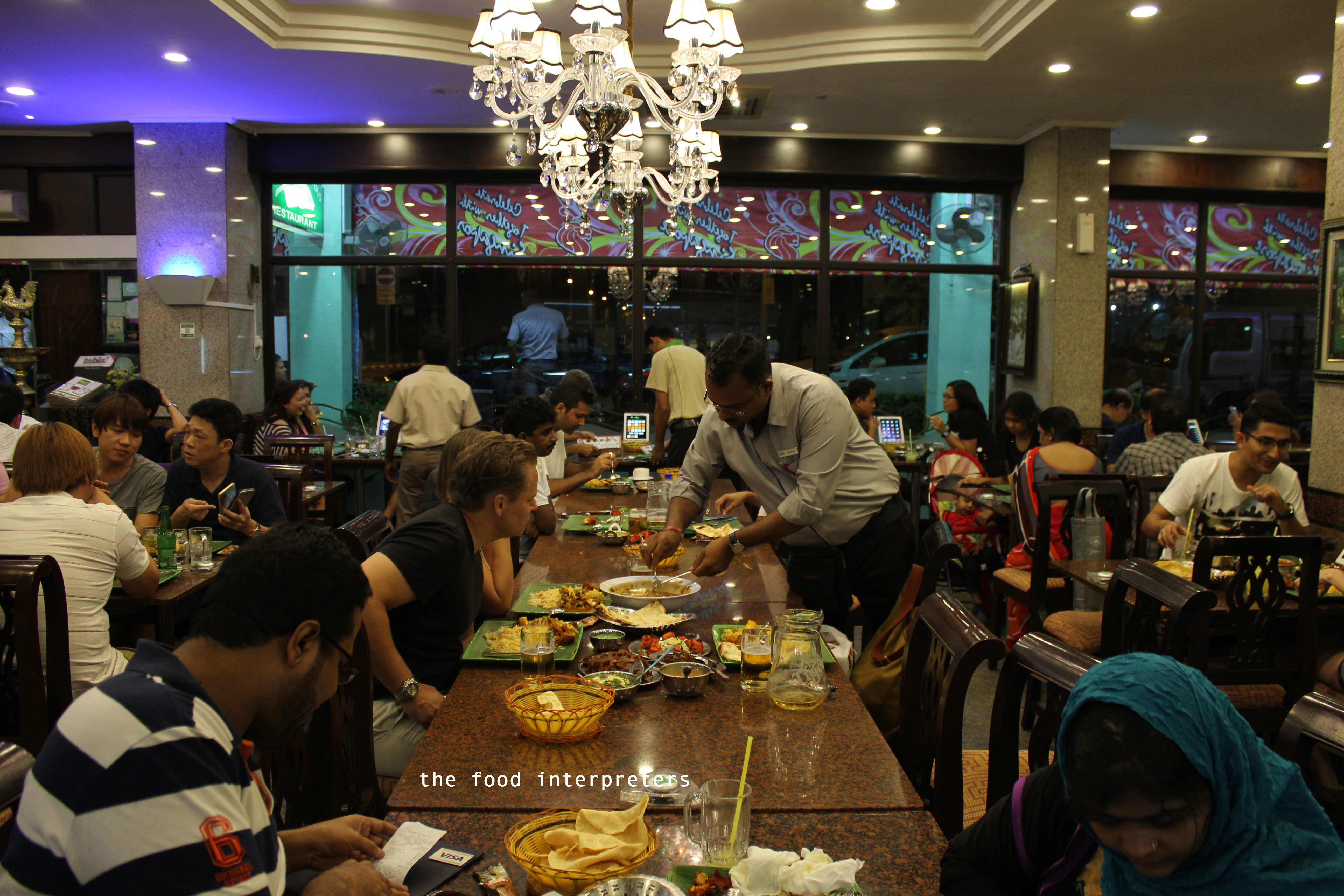
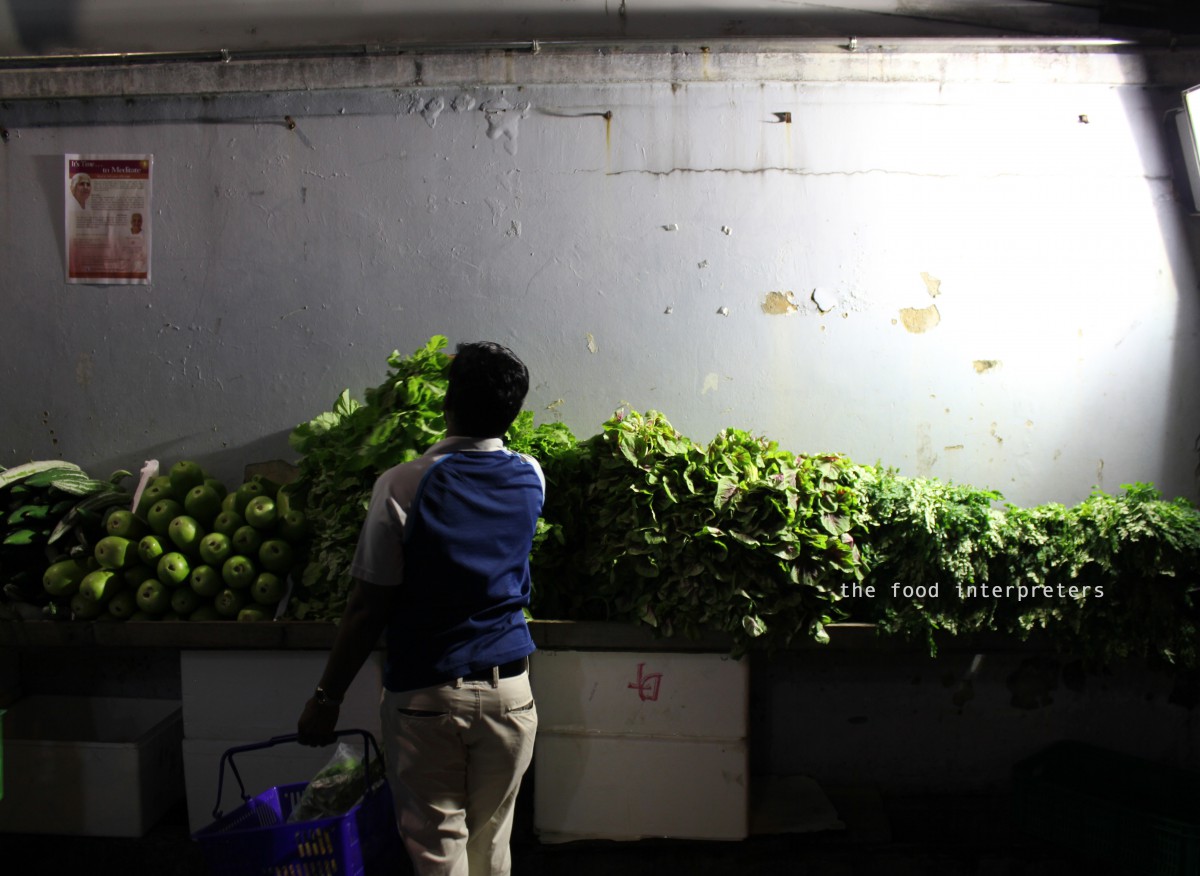
PS1: I’m not sure it’s mentioned in any of the guides, but a walk on a Sunday evening in the shrines and overcrowded food markets of Little India, followed by fish head curry dinner (above Sam inspecting the service) is definitely worth it.

IMG_5103

IMG_5094

PS2: I tried again in vain to have durian – the notorious local fruit-, this time as a juice diluted with watermelon.

Scones in the Summertime

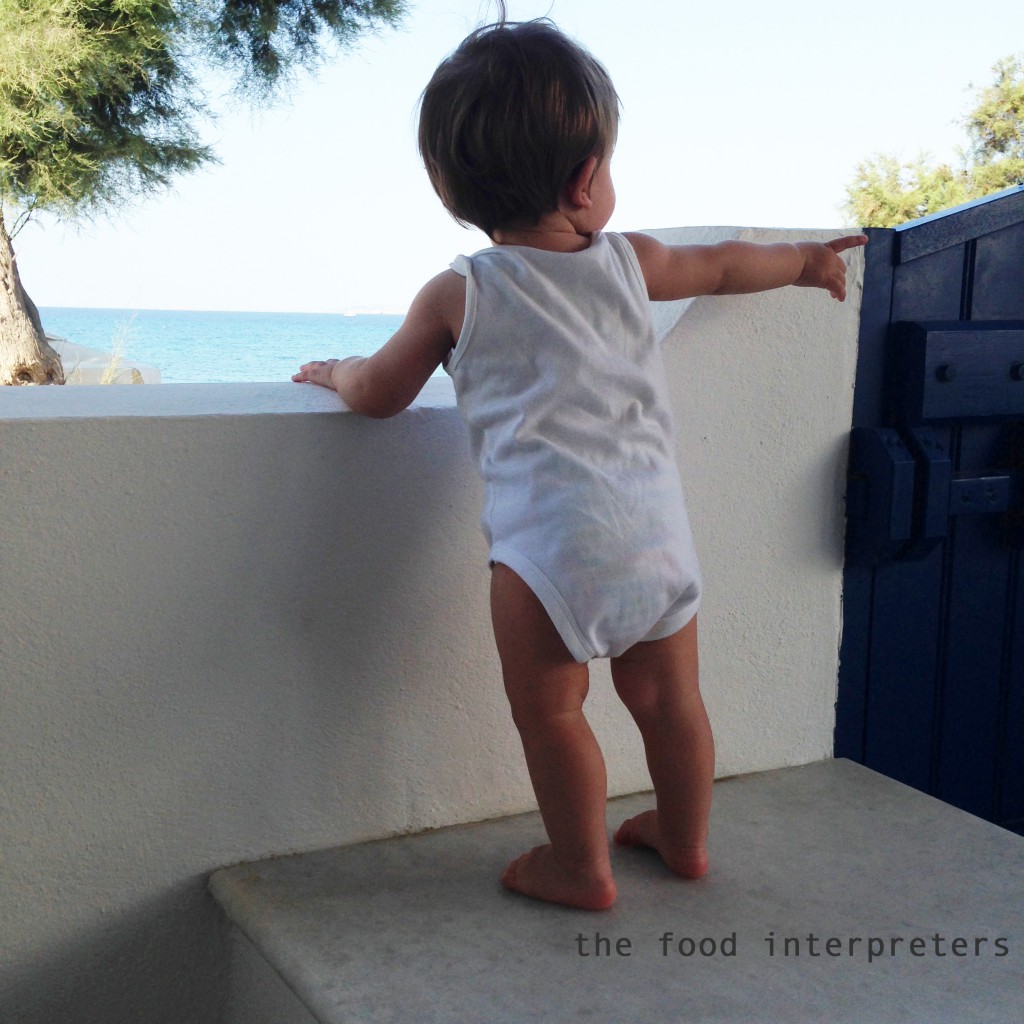
We returned to our house by the sea in Naxos after several years – this time with an extra member. We had to come up with a new eating-and-cooking routine, given also the fact that we entertained friends almost daily (or nightly). It had to be easy, fast and secure: cheese pies, scones, chocolate cakes, tzatziki, salads and of course lots  of local cheese, figs and watermelons.

For drinks Greek white wines (asyrtiko for the French friends who value terroire) and gin with tonic and lots of ice cubes. Whenever we ran out of cucumbers for the mix, because we put them all in the salad, we used watermelon – they both belong to the cucurbitaceae family.

We unpacked kitchenware and put the old stove into use, so we had to adjust cooking and baking times and temperatures.

kitchenNaxos

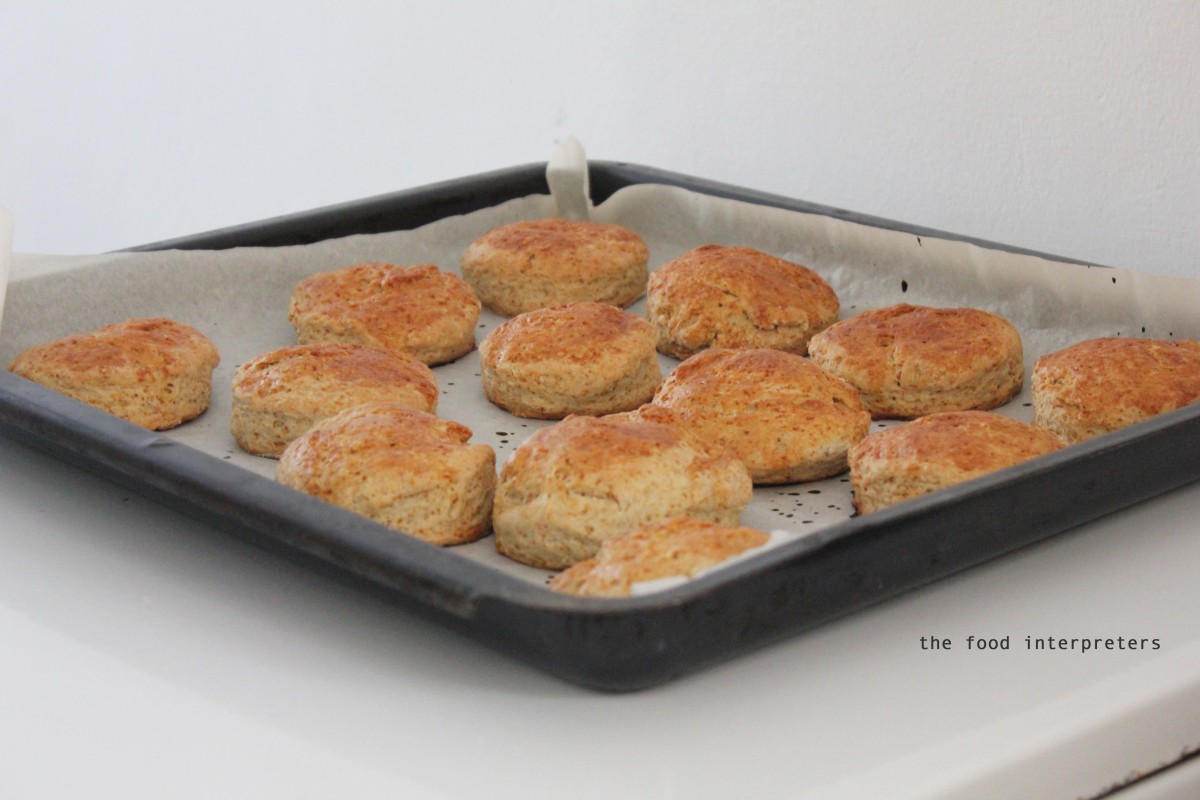
Scones were a success for breakfast, and we had them -unconventionally-  with some local cheese (graviera and xinotyri) or with our homemade apricot jam.  Here is our standard scone recipe, adapted from the cookbook of Rose Carrarini, Breakfast Lunch Tea.

scones

scones

Scones

Makes about 12 scones

  • 500g all purpose flour
  • 1 handful cornmeal or wholemeal flour
  • 2 very heaped Tbsp baking powder
  • 2 Tbsp caster sugar
  • 1 tsp salt
  • 125g unsalted butter, cut into cubes
  • 300ml milk
  • 1 egg, beaten

Preheat the oven to 200ºC  and line a baking tray with baking parchment.

Sift the all purpose flour into a bowl and add the cornmeal or wholemeal flour, the baking powder, sugar and salt. Then add the butter and mix with your hands (or an electric hand mixer) until the mixture resembles breadcrumbs.

Make a well in the middle, pour in the milk and combine it quickly with a fork (or an electric hand mixer) until dough forms. Finish by hand but without overworking the mixture. The dough must not be sticky. Add some milk if it is too dry or some flour if it is too wet.

On a lightly floured surface pat the dough into a round about 3cm thick. Take a 5cm cutter  and dip it into some flour.Plunge into the dough, then repeat until you have four scones. By this point you’ll probably need to press what’s left of the dough back into a round to cut out another four. Repeat until all the dough is used. Brush the tops with beaten egg, then carefully place onto the baking tray.

Bake for about 12 minutes until lightly golden.

Serve warm or at room temperature with jam and butter or clotted cream.

vas1

Cabinets of Curiosities

Cabinets of curiosities were collections of objects in a period when the science disciplines were not fixed as they are today. If you had to fit the objects into modern categories, you would classify them under ethnography, archeology, biology, medicine, art or hoax. Cabinets of curiosities provided an interpretation of the world according to the collector-patrons that assembled them and were put to use to elevate or asset their status.

Then the science books were written and the cabinets fell out of favor, got assimilated in museums or vanished into oblivion.

I do not know how their contemporaries viewed those collections. Did they realize the objective point of view or did they take the small indoor universes as a somewhat credible transformation of the world? Could they distinguish between the thrill of the bizarre and the potentiality of the measurable and actual? I cannot answer with certainty, because the association I have is the disappointment of a child when he realizes that the mystical and the unexplored is chastised in a world of precise maps and technology.

One of the last resorts of the curious is food. The curious is a matter of the point of view of course – things become distant and strange depending on your standpoint. The interesting thing with food is that you cannot pretend too much – if you find something uneatable or revolting it probably is, since you bare the measure of revoltness. The most interesting cases are those that lay in the tolerance frontier: not familiar, but with the potential of being appreciated.

This is no match(to say the least) to the exploratory spirit of the Livingstones and the Scots of past centuries. But what can we do? The geography of the continents is known down to the centimetre. What remains are the deep vaults of the sea abyss and the hawker stalls.

Chocolate mousse with olive oil

We are Greeks and we put olive oil into anything. For this recipe we use high quality chocolate and unripe extra virgin oil, but if it is too intense for your tastes, skip the ‘unripe’ part which gives a distinct fruitiness to the result.

It’s a rather uncomplicated recipe, unless you have a toddler who wants to participate in every step.

Adapted from a recipe by Stelios Parliaros. Serves 4-5

  • 200g good quality dark chocolate  (66% cocoa solids)
  • 40g extra virgin olive oil
  • 4 egg yolks
  • 4 egg whites
  • 50g caster sugar
  • 2 Tbsp brandy

Break the chocolate into small pieces and drop into a bowl with the olive oil. Fill a small saucepan about a quarter full with hot water, then sit the bowl on top so it rests on the rim of the pan, not touching the water. Put over a low heat until the chocolate has melted, stirring occasionally to mix with the olive oil.Remove the bowl from the pan. Cool slightly.

Beat the egg yolks with the brandy until pale yellow. Whisk in the melted chocolate.

Using an electric mixer, whisk the egg whites until soft peaks form. Add the sugar, whisking until stiff peaks form.

Gently fold whites into the chocolate mixture with a large spoon or rubber spatula until completely combined.

Divide the mousse into 4-5  ramekins, cups or glasses each with a capacity of 125ml and refrigerate for at least 3 hours.

chocolate mousse with olive oil

chocolate mousse with olive oil

Fennel and crumble gratin

This is an unusual combination of Mediterranean ingredients with British resourcefulness, facilitated by an Israeli chef.

Fennel is a Mediterranean plant, attested in Mycenaean Linear B tablets as ma-ra-tu-wo (it is still called marathos in Greek). Linear B was used by professional scribes for administrative purposes – we know that fennel was stocked or traded in Mycenaean palaces in the late bronze age (Helen of Troy enjoying fennel with honey?).

Fennel was introduced in the British Isles probably by the Romans. It is mentioned together with thyme, another ingredient of this recipe, in the pagan “Nine Herb Charm”, intended to treat poisoning and infection.

Crumble toppings became popular in the UK during WWII, as an economical alternative to pies due to shortages of ingredients as a result of rationing. (Despite its humble and rustic associations it crossed the channel and became popular with the french).

These two different ‘streams’ come together in this recipe of Ottolenghi , with some dissonance, because of the sugar in the crumble. You can have it cold or warm, as a starter or as a main dish.

This recipe is adapted from “Ottolenghi, The Cookbook”.

Serves 6-8 as a starter or 4 as a main dish.

For the crumble

  • 67g unsalted butter, cut into small cubes
  • 100g all purpose flour
  • 30g caster sugar
  • 100g grated parmesan cheese

For the gratin

  • 1kg fennel bulbs
  • 3 Tbsp olive oil
  • 1 Tbsp thyme leaves, plus a few thyme sprigs
  • 3 garlic cloves, minced
  • 1 Tbsp coarse sea salt
  • 1 Tbsp freshly ground black pepper
  • 200ml whipping cream
  • 300g cherry tomatoes
  • 1 tsp chopped parsley

For the crumble

Put the flour, sugar, grated parmesan and butter in a bowl and mix with your hands or an electric mixer fitted with the paddle attachment until it resembles breadcrumbs. Set aside.

Preheat the oven to 200ºC.

Cut off the fennel stalks and cut each bulb lengthways in half. Cut each half into slices 1cm thick. Place in a large bowl with the olive oil, thyme leaves, garlic, salt, pepper and cream and toss together. Transfer to an ovenproof dish and scatter the crumble evenly on top.

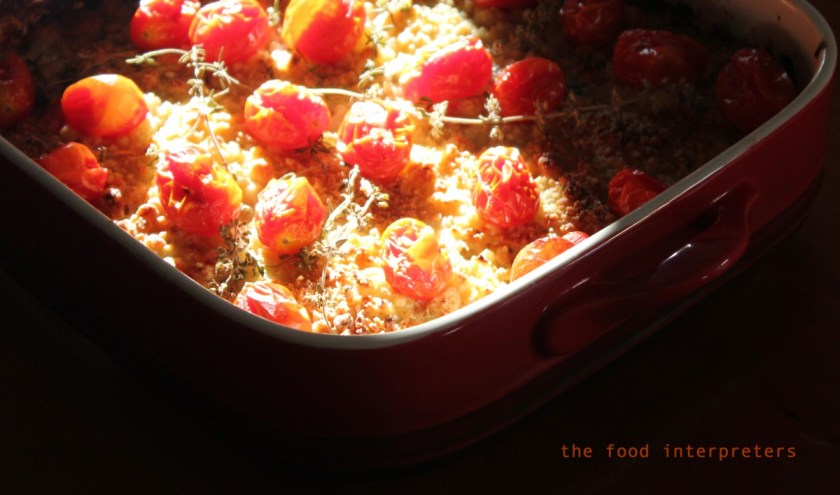
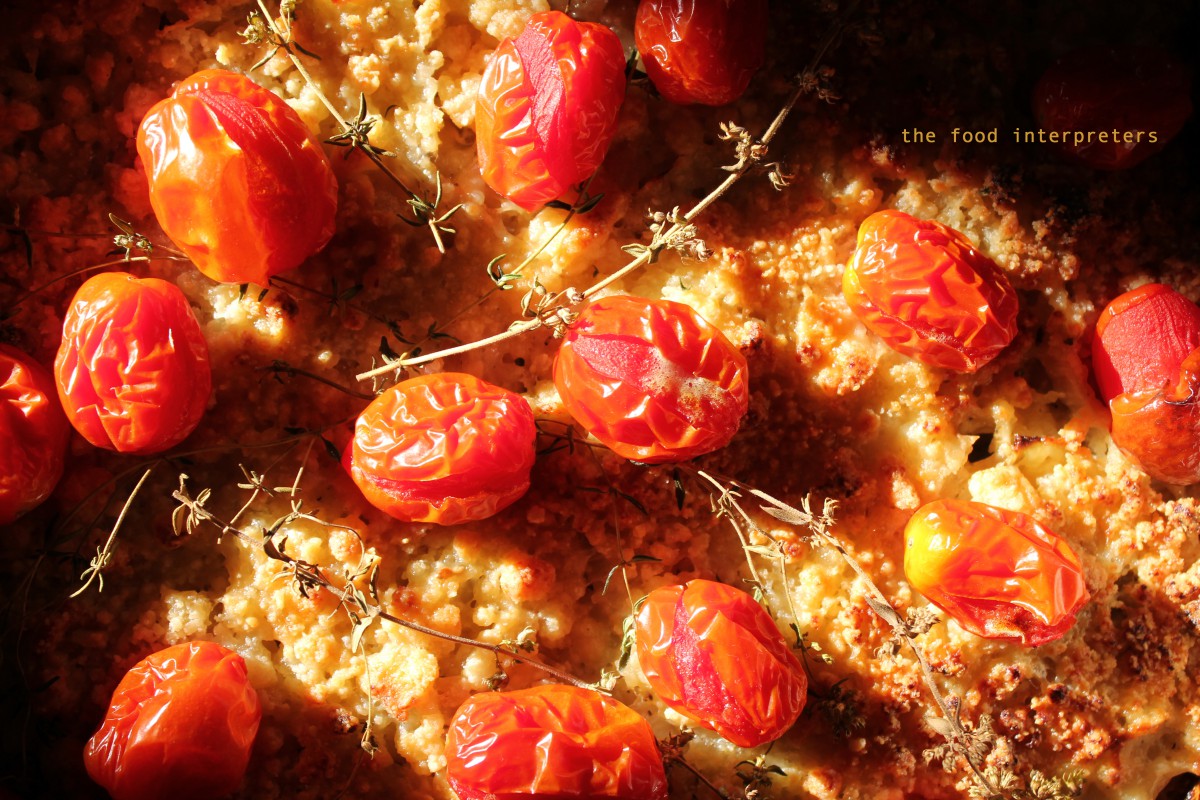
Cover the dish with foil and bake for 45 minutes. Remove the foil, scatter a few thyme sprigs and arrange the tomatoes on top. Return to the oven and bake for about 15 minutes, until the gratin has a nice golden colour.

Remove from the oven and allow to rest for a few minutes. Sprinkle with the chopped parsley and serve hot or warm.

Ottolenghi, Fennel and Crumble gratin

Ottolenghi, Fennel and Crumble gratin

Quiche Lorraine

This quiche Lorraine is ambiguous: thought to be as French as Edith Piaf, its origin and name (related to the german Kuchen) is German.  Regarded an easy dish, this version is anything but.

It is based on the recipe found in the book ‘Heston Blumenthal at Home’ which makes it by definition challenging to execute. But do not be discouraged, it will be an instant hit at your dinner parties. Plus it can be prepared a day in advance as this helps the custard filling to set properly. For the best flavour, it should be served warm or at room temperature. Serves 6 or hungry 4.

For the pastry

  • 230g all purpose flour
  • 1/2 tsp sea salt
  • 100g cold unsalted butter, cubed
  • 25g egg, lightly beaten (approx. 1/2 large egg)
  • 40g cold tap water

For the filling

  • 40g unsalted butter
  • 4 large onions, peeled  and finely sliced
  • 200g bacon lardons
  • 3 large eggs
  • 300g whipping cream
  • 80g grated gruyère cheese
  • 20g grated parmesan cheese
  • sea salt and freshly ground black pepper
  • nutmeg

For the pastry put the flour, salt and butter in a mixer fitted with the paddle attachment and combine until the mixture resembles breadcrumbs. Change to the hook attachment and add the cold water and the egg. Continue mixing until dough comes together to form a ball. Shape the dough into a disc, wrap in clingfilm and refrigerate for 30 minutes.

For the filling, melt the butter in a large heavy bottomed pan over medium heat. Add the onions and cook stirring occasionally for 10 minutes until they have softened and are translucent. Reduce the heat to medium-low and cook for about 40-50 more minutes, stirring occasionally, until the onions are soft and golden in colour. Drain the onions from any excess butter when cooked.

Tip the lardons in a small frying pan over low heat and fry them until just cooked, but not coloured. This should take about 5 minutes. Drain off any liquid that comes out and discard. Drain the lardons on paper towel.

Place the pastry between two sheets of baking parchment and roll out to a thickness of 2mm.

IMG_4632 copy

Butter a 24cm fluted tart tin, line with the pastry and gently push it into the base and edges,allowing the excess to hang over the sides. Prick all over the base of the tart with a fork and refrigerate for 30 minutes.

Preheat the oven to 170°C.

Cut a large circle of baking parchment and scrunch it  up a couple of times. Lay it over the pastry base, fill with beans or coins and bake for approximately 20 minutes before removing the beans or coins and parchment. Return the pastry case  to the oven and bake for a further 5-10 minutes, until golden brown. Remove the tart tin from the oven ,let cool a little and then, using a sharp knife, cut the excess pastry from around the top of the tart tin.

Reduce the oven temperature to 120ºC.

Combine the cream with the eggs in a saucepan and then add the cooked onions, lardons and the cheeses. Season with salt, freshly ground pepper and a pinch of freshly grated nutmeg. Place the pan over medium heat and bring the mixture to 63ºC, stirring constantly. This will take about 15 minutes.

Make sure the case is still warm when filling, if necessary reheat in the oven.

Fill the case with the cream mixture and return to the oven, until the temperature of the quiche filling reaches 70ºC. This will take approximately 30 minutes.

Allow to cool at room temperature for 20 minutes, then place in the refrigerator, preferably overnight. Then, before serving , bring back to room temperature or warm in an oven pre-heated to 150ºC for 5-10 minutes.

Sambal Chicken

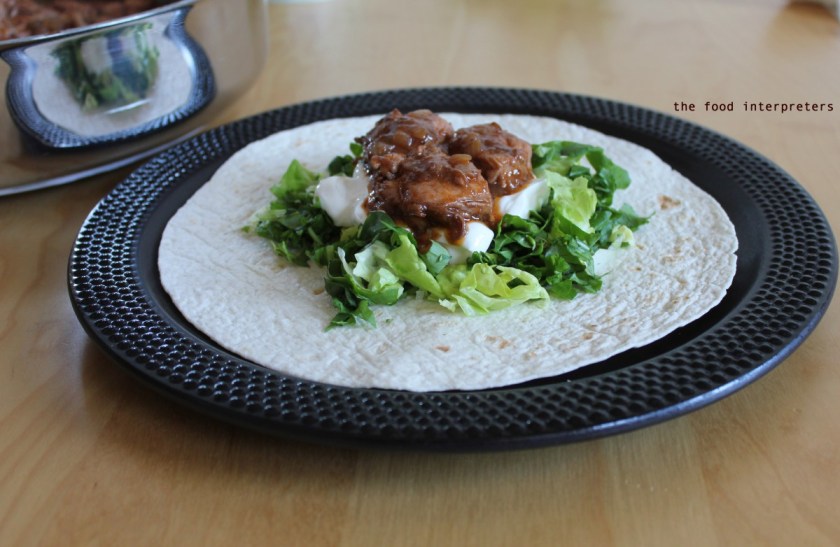
This is a somehow strange combination but works very well. It gives  a hint of Indonesia wrapped in a tortilla, balancing something familiar with the intense sambal. You can substitute the chicken with pork or even mix them.
For the sambal chicken
  • 6 skinless, boneless chicken breasts halves, cut in 2cm cubes
  • 3 cups (300g) onions, diced
  • 1/2 cup olive oil, plus more if needed
  • 4 Tbsp smoked chilli sambal
  • 1 cup port wine
  • sea salt and freshly ground black pepper

To serve

  • flour tortilla wraps
  • fresh salad leaves
  • greek yogurt

Heat the olive oil in a large and deep frying pan over medium heat. Add the chicken pieces in a single layer, in batches and cook until they are light brown on each side. As you finish each batch, transfer the chicken pieces to a bowl.

Add more olive oil to the pan if needed. Add the onions and cook until soft and translucent, stirring occasionally for about 3 minutes.

Return the chicken to the pan, add the sambal and cook stirring for about 2 minutes.

Add the port wine, reduce the heat to medium-low and cook for 5 minutes.

Cover the pan and let simmer until the chicken is cooked, for about 30 minutes, stirring from time to time.

Serve the sambal chicken in tortilla wraps  with chopped salad leaves of your choice and some yogurt.

sambal chicken

sambal chicken

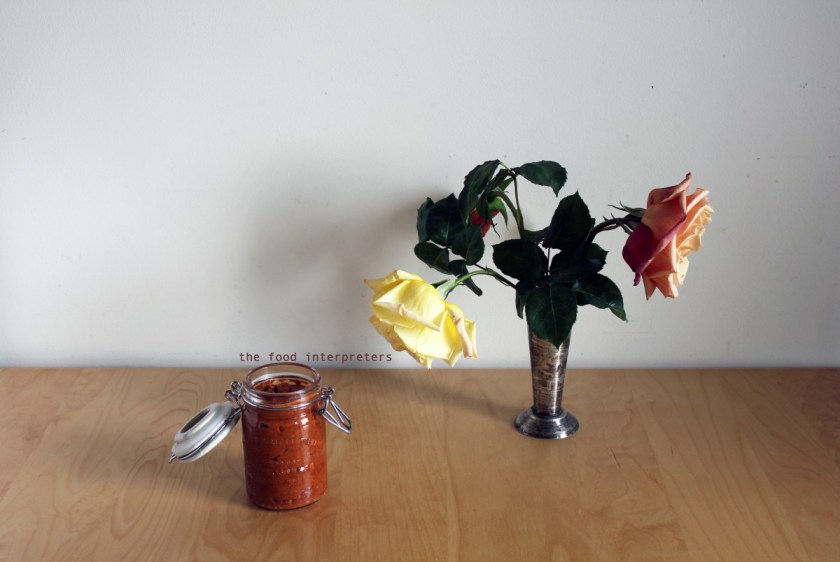
Smoked Chilli Sambal

Sambal is a spicy Southeast Asian chilli based condiment. There are lots of variations, incorporating many different flavourings and spices.

You can add sambal to boiled or fried potatoes, omelettes, fish, prawns, chicken or meat, you can also try it on crackers or in sandwiches. Τhere is actually no limit to the way you can use it, just follow your imagination!

It is time consuming, but worth the effort. Cooled and stored in airtight jars, this sambal will keep in the refrigerator for several months. You can also freeze it in small batches.

For the Smoked Chilli Sambal , based on the recipe of “The Modern Pantry” cookbook, by Anna Hansen, you will need:

  • sunflower oil for deep-frying
  • 250g red peppers, sliced
  • 250g onions, sliced
  • 250g cherry tomatoes
  • 80g fresh ginger, cut into fine strips
  • 80g garlic, sliced
  • 25g dried prawns, ground in a grinder
  • 1 tsp hot smoked paprika
  • 1/2 tsp dried chilli flakes
  • 125g tamarind paste*
  • 40ml fish sauce

In a deep saucepan heat some oil to 180°C. Deep-fry the red peppers, onions and tomatoes separately until almost burnt looking. Drain them on kitchen paper. Deep-fry the ginger and garlic in separate batches until golden brown.

In a small frying pan, fry the ground shrimps in 2 Tbsp of the already used oil until fragrant. Add them to a bowl along with the fried peppers, onions, tomatoes, ginger, garlic, the rest of the ingredients and mix well.

Blend the sambal in batches in a food processor until smooth. Store in airtight jars and refrigerate or freeze until needed.

*You can buy tamarind as a ready to use paste or in a sticky, dense block of pulp and seed, which is very easily transformed into a paste. I followed this technique.

Vietnamese Shaking Beef (Thit Bo Luc Lac)

The Ferry building is an iconic San Francisco landmark, featuring in movies set at least 300 years apart – from “The Maltese Falcon” in 1941 to “ Star Trek, Into Darkness” in 2259.  It is there where the “Slanted Door” is located – facing the amazing SF Bay  – and not in Little Saigon next to Chinatown of Polanski fame. Silicon Valley talents along more artistic crowds queue to taste the modern Vietnamese cuisine of chef Charles Phan.

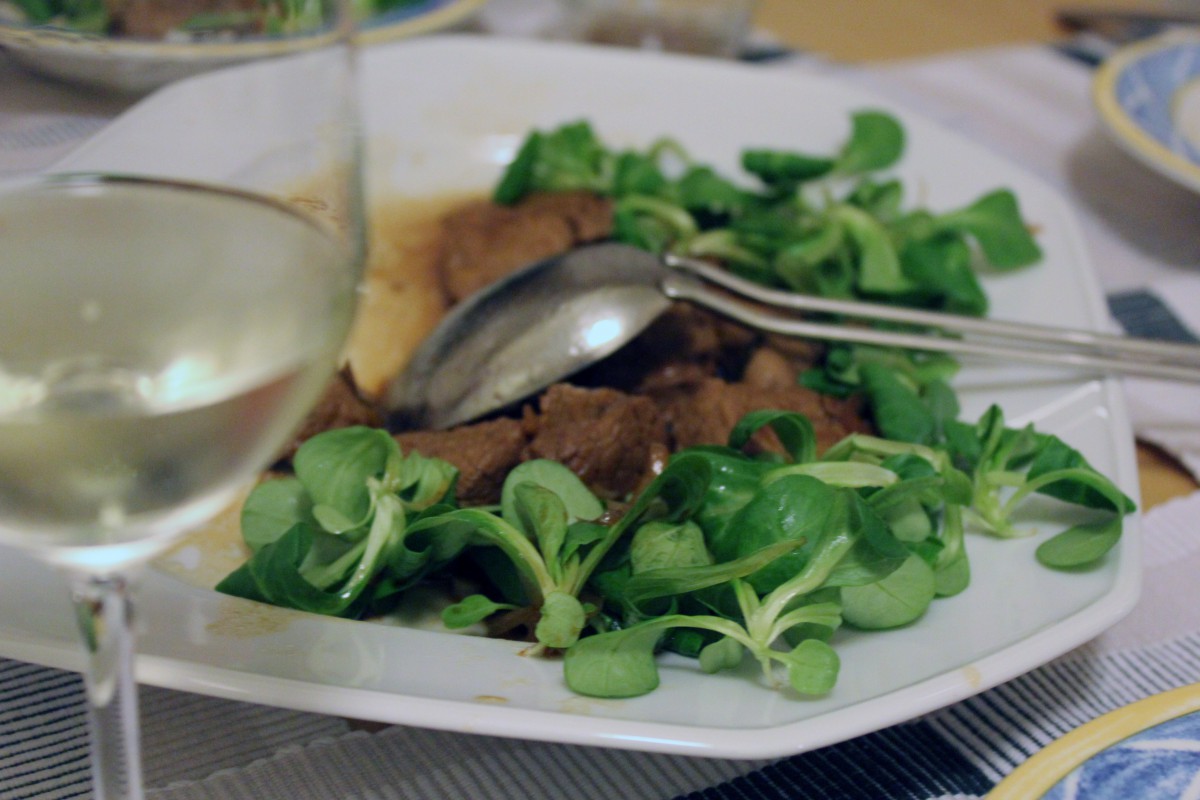
‘Shaking beef’ (Thit bo luc lac) is one of his most popular dishes. It is traditional Vietnamese celebratory food adapted for western jaws. The tough beef cuts have been replaced by tender fillet mignons. “Luc lac” means shaking and refers to the tossing of the beef (thit bo) in the wok while cooking. It is simple to cook and very tasty.

The recipe that follows is an adapted version from the eponymous “The Slanted Door, modern Vietnamese food” . Serves 4.

  • 700g filet mignon, trimmed of fat and cut into 2cm cubes
  • 5 Tbsp corn oil
  • 1 Tbsp plus 1 tsp sugar
  • 1 tsp sea salt flakes
  • 1 tsp freshly ground black pepper
  • 1/4 cup rice vinegar
  • 1/4 cup mirin
  • 1/4 cup light soy sauce
  • 1 Tbsp dark soy sauce
  • 2 tsp fish sauce
  • 1 cup red onion, thinly sliced
  • 3 green onions cut into 2cm pieces
  • 2 cloves of garlic, minced
  • 2 Tbsp unsalted butter
  • 2 cups of watercress or valerian salad, washed and cleaned with tough stems removed

For the dipping sauce

  • 2 tsp sea salt flakes
  • 1 tsp freshly ground black pepper
  • 1/4 cup lime juice

In a large mixing bowl whisk together 1 Tbsp of the oil, 1 tsp of the sugar and the salt and pepper until well combined. Add the cubed beef, toss to combine and let marinate for 2 hours.

In another bowl, combine the rice vinegar, mirin, light and dark soy sauces, fish sauce and 1 Tbsp sugar, until the sugar has dissolved.

Heat a wok over high heat. Add 2 Tbsp of the oil to the wok and heat until shimmering, but not smoking. Add half of the beef in a single layer and sear until a brown crust forms on the bottom side, for about 3 minutes.

Flip the beef over to brown the other side, for about 1 minute.

Add half of each green onions and red onions and cook stirring for 30 seconds. Add half the soy sauce mixture and shake the pan to coat the beef. Add half each of garlic and butter and continue to shake the wok until butter is melted and equally distributed.

Remove the meat and onions from the wok, transfer to a bowl and keep warm.

Wipe the wok clean and return to high heat. Repeat with the remaining half of the ingredients.

When ready to serve arrange the salad on a platter and spoon hot beef and onions on top making sure to drizzle some of the beef juices over the salad as well.

To prepare the dipping sauce, stir together the lime juice, salt and pepper in a small ramekin.

Serve the shaking beef with the dipping sauce.

shaking beef shaking beef

Persian Broad Beans with Eggs – Baghali Ghatogh

Broad beans (or fava beans) have a long relation with the inhabitants of the Eastern Mediterranean and the Middle East. They are being cultivated for 8000 years and have left their mark in epidemiology and politics as well – they were used as votes in Ancient Greece. A small percentage of the population in the area do not take broad beans well and this is somehow related to the resistance against endemic malaria. So consuming broad beans was not always without risk.

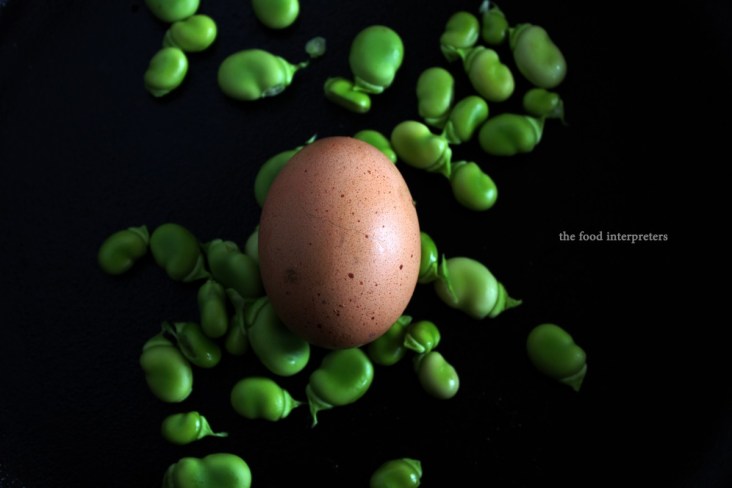
Right now it is their season and our garden is full of them. So we decided to try out this dish, that an Iranian friend used to cook for us some years ago. We didn’t have the recipe, so we did some research and several trials.

It is a quick and easy recipe, given that you’ve already podded and shelled your broad beans, because that takes time. A lot of time actually…

IMG_4232

To shell your podded beans, put them in a saucepan, cover them with water and bring to a boil for 1 minute. Then drain the beans and plunge them into a bowl of ice cold water. This step softens the second skin, making it easier to remove. With your fingers, squeeze the bean out from its skin.

The original recipe calls for dill, but as our garden is full of fennel at the moment, we gave it a try and we liked it.

This recipe serves two persons as a main dish or four as a starter.

  • 300g fresh broad beans,podded and shelled (you will need 1,5kg beans in their pods)
  • 4 garlic cloves, thinly sliced
  • 1 cup dill or fennel, stalks and leaves finely chopped
  • 3/4 cup warm water
  • 1 tsp ground turmeric
  • 4 Tbsp olive oil
  • salt and pepper
  • 4 eggs

Heat the olive oil in a deep frying pan over medium heat and cook the garlic until soft and translucent for about one minute. Add the broad beans and stir well , taking care not to break them up.

Add the turmeric, the dill or fennel, sea salt and pepper, the warm water and cook for about eight minutes, stirring from time to time. If it starts to dry up, add some more warm water.

Crack the eggs one by one on the surface of the stew and let them cook using the heat from the beans, giving the pan a shake to distribute the egg whites. This will take  about eight minutes.

Sprinkle the top of the eggs with some sea salt and freshly ground pepper.

Serve with fresh sourdough bread.